Oh and he said read my book too lolI had one session with this guy a couple years ago, the only HTMA practitioner I ever saw and he was terrible, gave me 0 advice and just said keep doing what you're doing lol.... big scam

You are using an out of date browser. It may not display this or other websites correctly.
You should upgrade or use an alternative browser.
You should upgrade or use an alternative browser.
MNK's Log. PSSD Recov 12-18mo 10', PFS recov 11m-16mo 18’. hEDS/AuDHD/Markets.
- Thread starter MNK99
- Start date

MNK99
Well-Known Member
- Messages
- 5,560
could not find it bro it was on in background but I was going to say that at 30mins or maybe 90mins (saw it weeks ago hell maybe 2-3mo ago), i was gonna say he stopped making sense at some point.
But i turned it to like 80% the way thru and it wasn't so bad. Maybe they rely on people not paying attention, then it looks like it makes sense.
DUDE that's what I'm saying. I mean test cream isn't gonna hurt me as much as these retards are... isn't CLARKE E doing this for a living... he took 6 yrs to lose weight and detox psyche meds?? what ... i did that on my own before moving abusive family (doctors) in the UK on my own.. in like one day, detoxing.
I quit effexor, seroquel, prolly zoloft at times, ativan etc in one day. And i thought I had bipolar II. imagine that at 19-21. that is crazy. So yeah that's why I don't get tests all the time.
by the way my uncle and also my OLD doctor here for ADHD both used low dose lithium for patients at times. Like lithium orotate, but for whatever reason my doctor here I guess he stopped doing that years ago. Probably wasn't allowed. I used that here and there, quit bc... joint instability. Most my problems with vyvanse etc were that too (years ago). I didn't know what it was but that was all HSD or hEDS.
But actually fixing it on my own... a year or two later.
Look I think minerals are really strong but I believe you and I can read and make our own minds and if we really need a practitioner we can find someone.
BTW even tho he was on her channel, I think Judy is a lot more legit than that guy. She probably just thought
But i turned it to like 80% the way thru and it wasn't so bad. Maybe they rely on people not paying attention, then it looks like it makes sense.
DUDE that's what I'm saying. I mean test cream isn't gonna hurt me as much as these retards are... isn't CLARKE E doing this for a living... he took 6 yrs to lose weight and detox psyche meds?? what ... i did that on my own before moving abusive family (doctors) in the UK on my own.. in like one day, detoxing.
I quit effexor, seroquel, prolly zoloft at times, ativan etc in one day. And i thought I had bipolar II. imagine that at 19-21. that is crazy. So yeah that's why I don't get tests all the time.
by the way my uncle and also my OLD doctor here for ADHD both used low dose lithium for patients at times. Like lithium orotate, but for whatever reason my doctor here I guess he stopped doing that years ago. Probably wasn't allowed. I used that here and there, quit bc... joint instability. Most my problems with vyvanse etc were that too (years ago). I didn't know what it was but that was all HSD or hEDS.
But actually fixing it on my own... a year or two later.
Look I think minerals are really strong but I believe you and I can read and make our own minds and if we really need a practitioner we can find someone.
BTW even tho he was on her channel, I think Judy is a lot more legit than that guy. She probably just thought
Yeah he is too old now I think but yeah hes supposed to be the OG and the HTMA guru in mineral balancing communitycould not find it bro it was on in background but I was going to say that at 30mins or maybe 90mins (saw it weeks ago hell maybe 2-3mo ago), i was gonna say he stopped making sense at some point.
But i turned it to like 80% the way thru and it wasn't so bad. Maybe they rely on people not paying attention, then it looks like it makes sense.
MNK99
Well-Known Member
- Messages
- 5,560
Oh maybe he WAS really good but he had some cognitive decline. maybe. some old people go downhill a lot.
Also if he talked about it a million x, he probably just glances over it and goes off on a rant. I get it. Not the decline part (sure in PFS crash that was worse even worse).
If you want a pracititioner maybe write Catherine (worth a shot lol, she was really nice to me). Or TheBodyAtomic. Surely someone in the UK also but I am sure there are predatory people that took a weekend course in nutrition or even if they did a phd in nutrition, there are ppl just profiteering off people's misery. So I'd be careful. You can probably tell who is a bullshitter and who's not though. Especially in person.
In decent health, worst case one can change the guy or girl they are getting help from though.
That guy's British? I guess so.
Also if he talked about it a million x, he probably just glances over it and goes off on a rant. I get it. Not the decline part (sure in PFS crash that was worse even worse).
If you want a pracititioner maybe write Catherine (worth a shot lol, she was really nice to me). Or TheBodyAtomic. Surely someone in the UK also but I am sure there are predatory people that took a weekend course in nutrition or even if they did a phd in nutrition, there are ppl just profiteering off people's misery. So I'd be careful. You can probably tell who is a bullshitter and who's not though. Especially in person.
In decent health, worst case one can change the guy or girl they are getting help from though.
That guy's British? I guess so.

MNK99
Well-Known Member
- Messages
- 5,560
--just for interest
--i like learning... i realize i have some issues but i am not carving this into my skin nor painting my neighbor's walls, with their brains.
--i'm fine.
Emily L. Casanova
1,2,* ,
Julia L. Sharp
3,
Stephen M. Edelson
4,
Desmond P. Kelly
2 and
Manuel F. Casanova
1,2
1
Department of Biomedical Sciences, University of South Carolina School of Medicine Greenville, Greenville, SC 29605, USA
2
Department of Pediatrics, Greenville Health System Children’s Hospital, Greenville, SC 29605, USA
3
Department of Statistics, Colorado State University, Fort Collins, CO 80523, USA
4
Autism Research Institute (ARI), San Diego, CA 92116, USA
*
Author to whom correspondence should be addressed.
Behav. Sci. 2018, 8(3), 35; A Cohort Study Comparing Women with Autism Spectrum Disorder with and without Generalized Joint Hypermobility
Submission received: 23 November 2017 / Revised: 26 February 2018 / Accepted: 15 March 2018 / Published: 17 March 2018
(This article belongs to the Special Issue Selected Papers from CUBANNI 2017—“The Fourth International Workshop of Neuroimmunology”)
Downloadkeyboard_arrow_down
Browse Figures
Review Reports Versions Notes
Keywords:
connective tissue diseases; autoimmunity; mast cells; immunity; humoral; endocrine system diseases; neurodevelopmental disorders
Generalized joint hypermobility (GJH) is a major feature of Hypermobile EDS (hEDS) and other connective tissue disorders. In addition, GJH can either be benign or associated with significant musculoskeletal impairment; the latter of which is often affected by an individual’s age, leading to changes in diagnosis over time. According to newer nosology [1], when GJH occurs in conjunction with significant impairment and other criteria for hEDS are not met, it is diagnosed as “Generalized Hypermobility Spectrum Disorder (G-HSD).” Studies have shown that hEDS and GJH often co-segregate within families, indicating linked etiologies in some cases [reviewed in 1].
Neuropsychiatric manifestations are common secondary symptoms in EDS/GJH. In particular, anxiety and mood disorders are prominent and probably the best studied to date [2,3]. However, a thorough review of the literature by Baeza-Velasco et al. [4] suggests significant links between EDS and autism, as well as other neurodevelopmental and psychiatric conditions such as attention-deficit hyperactivity disorder (ADHD), schizophrenia, eating disorders, personality disorders, and even substance abuse. Interestingly, work by Shetreat et al. [5] and Eccles et al. [6] indicates that joint hypermobility is significantly more common in children and adults with autism than age- and gender-matched controls, suggesting etiological links between some cases of autism and connective tissue disorders.
Immune dysregulation has been a popular area of study in autism research, whose foci center around topics of maternal immune activation (MIA), prevalence of autoimmunity, and other aspects of general immune dysfunction [9]. In regards to the latter, Careaga et al. [10] have identified two non-overlapping Th1- and Th2-skewed endophenotypes that are especially prominent in children with ASD.
Hormonal exophenotypes, in contrast, have been less well-studied in ASD. One study by Ingudomnokul et al. [11] found that high-functioning women on the autism spectrum and their mothers reported high rates of endocrine disorders. However, most endocrine research to date has focused on maternal disorders with an emphasis on etiological risk factors, such as diabetes, hirsutism, and polycystic ovary syndrome (PCOS) [12,13,14].
High rates of immune- and endocrine-mediated disorders have also been reported in EDS, though they are currently viewed as secondary symptoms to what are traditionally seen as “collagen disorders” [15,16,17]. While it has previously been difficult to explain links between immune and collagen dysfunction, research into the connective tissue disorders, Marfan and Loeys-Dietz Syndromes, which share features of overlap with EDS, may help to guide future EDS research.
In order to study the frequency and relationship of immune and endocrine exophenotypes in adult women with ASD, with or without GJH, we have utilized self-reports covering a range of clinical symptoms, including features of chronic allergies, autoimmunity, irritable bowel syndrome (IBS)/gastrointestinal (GI) dysfunction, and menstrual irregularities.
Our study group was composed of two English-speaking subpopulations: (1) women 25 years and older with a diagnosis of ASD (referred to here as simply “ASD”) (N = 85); and (2) women 25 years or older with dual ASD and EDS, G-HSD, or Joint Hypermobility Syndrome (JHS) diagnoses (referred to here as “ASD/GJH”) (N = 20) (Figure 1). Individuals who were male, were under the age of 25, or did not have a diagnosis of ASD were excluded. In the ASD group, further exclusionary criteria were applied: (a) An individual’s responses were removed from the data pool if she suspected the presence of GJH but was currently undiagnosed, and/or (b) reported double-jointedness across two or more types of joints [18]. The majority of women reporting EDS diagnosis had hEDS, although a small minority reported diagnosis of Classical EDS. (See Table 1 for descriptions of terms and definitions.)
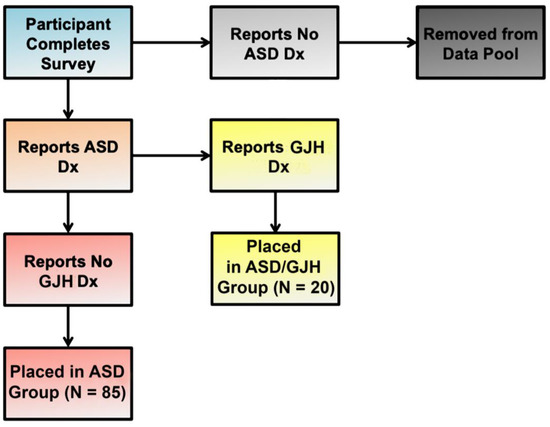
Figure 1. Flow chart illustrating group allocation according to reported diagnoses.
Table 1. Terms and diagnoses related to the connective tissue disorders discussed in the manuscript.

Our groups were sex-matched and did not differ significantly by age (t = −0.327, df = 28.451, p = 0.7459). Full data are presented in Supplementary File 2, Tables S1–S7. All data were complete, with the exception of two respondents’ answers on the topic of “Other Chronic Pain”.
Due to the biased manner in which respondents were recruited [i.e., specifically targeting both ASD and ASD/GJH subgroups via respective web fora (see Section 2.2 under Methods)], we are unable to estimate the prevalence of GJH in the female ASD population. However, this method allowed us to collect a larger pool of ASD/GJH respondents, which might otherwise be underrepresented. In doing so, we are able to study group differences more easily.
--i like learning... i realize i have some issues but i am not carving this into my skin nor painting my neighbor's walls, with their brains.
--i'm fine.
A Cohort Study Comparing Women with Autism Spectrum Disorder with and without Generalized Joint Hypermobility
byEmily L. Casanova
1,2,*
,Julia L. Sharp
3,
Stephen M. Edelson
4,
Desmond P. Kelly
2 and
Manuel F. Casanova
1,2
1
Department of Biomedical Sciences, University of South Carolina School of Medicine Greenville, Greenville, SC 29605, USA
2
Department of Pediatrics, Greenville Health System Children’s Hospital, Greenville, SC 29605, USA
3
Department of Statistics, Colorado State University, Fort Collins, CO 80523, USA
4
Autism Research Institute (ARI), San Diego, CA 92116, USA
*
Author to whom correspondence should be addressed.
Behav. Sci. 2018, 8(3), 35; A Cohort Study Comparing Women with Autism Spectrum Disorder with and without Generalized Joint Hypermobility
Submission received: 23 November 2017 / Revised: 26 February 2018 / Accepted: 15 March 2018 / Published: 17 March 2018
(This article belongs to the Special Issue Selected Papers from CUBANNI 2017—“The Fourth International Workshop of Neuroimmunology”)
Downloadkeyboard_arrow_down
Browse Figures
Review Reports Versions Notes
Abstract
Reports suggest comorbidity between autism spectrum disorder (ASD) and the connective tissue disorder, Ehlers-Danlos syndrome (EDS). People with EDS and the broader spectrum of Generalized Joint Hypermobility (GJH) often present with immune- and endocrine-mediated conditions. Meanwhile, immune/endocrine dysregulation is a popular theme in autism research. We surveyed a group of ASD women with/without GJH to determine differences in immune/endocrine exophenotypes. ASD women 25 years or older were invited to participate in an online survey. Respondents completed a questionnaire concerning diagnoses, immune/endocrine symptom history, experiences with pain, and seizure history. ASD women with GJH (ASD/GJH) reported more immune- and endocrine-mediated conditions than their non-GJH counterparts (p = 0.001). Autoimmune conditions were especially prominent in the ASD/GJH group (p = 0.027). Presence of immune-mediated symptoms often co-occurred with one another (p < 0.001–0.020), as did endocrine-mediated symptoms (p < 0.001–0.045), irrespective of the group. Finally, the numbers of immune- and endocrine-mediated symptoms shared a strong inter-relationship (p < 0.001), suggesting potential system crosstalk. While our results cannot estimate comorbidity, they reinforce concepts of an etiological relationship between ASD and GJH. Meanwhile, women with ASD/GJH have complex immune/endocrine exophenotypes compared to their non-GJH counterparts. Further, we discuss how connective tissue regulates the immune system and how the immune/endocrine systems in turn may modulate collagen synthesis, potentially leading to higher rates of GJH in this subpopulation.Keywords:
connective tissue diseases; autoimmunity; mast cells; immunity; humoral; endocrine system diseases; neurodevelopmental disorders
1. Introduction
Ehlers-Danlos syndrome (EDS) is a group of phenotypically-related disorders subtyped according to variations in underlying genetic pathology, primary symptom severity, and secondary symptom associations. All of these conditions are typified by deficits in collagen production and maintenance, leading to structural changes within the connective tissues of the body. These changes are most evident within the joints and skin, although many other systems can be affected.Generalized joint hypermobility (GJH) is a major feature of Hypermobile EDS (hEDS) and other connective tissue disorders. In addition, GJH can either be benign or associated with significant musculoskeletal impairment; the latter of which is often affected by an individual’s age, leading to changes in diagnosis over time. According to newer nosology [1], when GJH occurs in conjunction with significant impairment and other criteria for hEDS are not met, it is diagnosed as “Generalized Hypermobility Spectrum Disorder (G-HSD).” Studies have shown that hEDS and GJH often co-segregate within families, indicating linked etiologies in some cases [reviewed in 1].
Neuropsychiatric manifestations are common secondary symptoms in EDS/GJH. In particular, anxiety and mood disorders are prominent and probably the best studied to date [2,3]. However, a thorough review of the literature by Baeza-Velasco et al. [4] suggests significant links between EDS and autism, as well as other neurodevelopmental and psychiatric conditions such as attention-deficit hyperactivity disorder (ADHD), schizophrenia, eating disorders, personality disorders, and even substance abuse. Interestingly, work by Shetreat et al. [5] and Eccles et al. [6] indicates that joint hypermobility is significantly more common in children and adults with autism than age- and gender-matched controls, suggesting etiological links between some cases of autism and connective tissue disorders.
Immune & Endocrine Dysregulation in ASD & GJH
Immune and neuroendocrine crosstalk is a well-established phenomenon. These systems are linked via two primary pathways through which that crosstalk is achieved: (1) the sympathoadrenal system and (2) the hypothalamo-pituitary-adrenal axis [7]. The immune system can also have a direct effect on oogenesis through the presence of innate and adaptive immune cells located within the ovarian germ cell pool, which release morphoregulatory signals that stimulate or suppress ovulation [8].Immune dysregulation has been a popular area of study in autism research, whose foci center around topics of maternal immune activation (MIA), prevalence of autoimmunity, and other aspects of general immune dysfunction [9]. In regards to the latter, Careaga et al. [10] have identified two non-overlapping Th1- and Th2-skewed endophenotypes that are especially prominent in children with ASD.
Hormonal exophenotypes, in contrast, have been less well-studied in ASD. One study by Ingudomnokul et al. [11] found that high-functioning women on the autism spectrum and their mothers reported high rates of endocrine disorders. However, most endocrine research to date has focused on maternal disorders with an emphasis on etiological risk factors, such as diabetes, hirsutism, and polycystic ovary syndrome (PCOS) [12,13,14].
High rates of immune- and endocrine-mediated disorders have also been reported in EDS, though they are currently viewed as secondary symptoms to what are traditionally seen as “collagen disorders” [15,16,17]. While it has previously been difficult to explain links between immune and collagen dysfunction, research into the connective tissue disorders, Marfan and Loeys-Dietz Syndromes, which share features of overlap with EDS, may help to guide future EDS research.
In order to study the frequency and relationship of immune and endocrine exophenotypes in adult women with ASD, with or without GJH, we have utilized self-reports covering a range of clinical symptoms, including features of chronic allergies, autoimmunity, irritable bowel syndrome (IBS)/gastrointestinal (GI) dysfunction, and menstrual irregularities.
2. Methods
2.1. Study Population
The vast majority (94%) of respondents were affected persons themselves, rather than family members responding for adult wards. As such, it is assumed that the majority of our study population was composed of women with an IQ > 70 due to their abilities to answer a series of complex questions about general health.Our study group was composed of two English-speaking subpopulations: (1) women 25 years and older with a diagnosis of ASD (referred to here as simply “ASD”) (N = 85); and (2) women 25 years or older with dual ASD and EDS, G-HSD, or Joint Hypermobility Syndrome (JHS) diagnoses (referred to here as “ASD/GJH”) (N = 20) (Figure 1). Individuals who were male, were under the age of 25, or did not have a diagnosis of ASD were excluded. In the ASD group, further exclusionary criteria were applied: (a) An individual’s responses were removed from the data pool if she suspected the presence of GJH but was currently undiagnosed, and/or (b) reported double-jointedness across two or more types of joints [18]. The majority of women reporting EDS diagnosis had hEDS, although a small minority reported diagnosis of Classical EDS. (See Table 1 for descriptions of terms and definitions.)
Figure 1. Flow chart illustrating group allocation according to reported diagnoses.
Table 1. Terms and diagnoses related to the connective tissue disorders discussed in the manuscript.
Our groups were sex-matched and did not differ significantly by age (t = −0.327, df = 28.451, p = 0.7459). Full data are presented in Supplementary File 2, Tables S1–S7. All data were complete, with the exception of two respondents’ answers on the topic of “Other Chronic Pain”.
Due to the biased manner in which respondents were recruited [i.e., specifically targeting both ASD and ASD/GJH subgroups via respective web fora (see Section 2.2 under Methods)], we are unable to estimate the prevalence of GJH in the female ASD population. However, this method allowed us to collect a larger pool of ASD/GJH respondents, which might otherwise be underrepresented. In doing so, we are able to study group differences more easily.
MNK99
Well-Known Member
- Messages
- 5,560
2.2. Survey
This study was approved by the Institutional Review Board (IRB) of the Greenville Health System (GHS) (ID: Pro00061122). The survey utilized in this study was designed by our research group based in part on previous informal survey studies performed by the Autism Research Institute (ARI). These questions were further adapted and expanded according to an additional literature search of relevant clinical symptomology for our topics of interest. (See Supplementary File 1 for full survey.)
The survey was built on and hosted by the website, SurveyGizmo.com, and was advertised via the ARI newsletter; the ASD forum, Wrong Planet; and a variety of FaceBook ASD- and EDS-specific webcommunities, such as the Autism Women’s Network (AWN), the Autism Spectrum Women’s Group, AutismTalk, the Ehlers-Danlos Support Group, and Ehlers-Danlos Worldwide. The administrative teams of all participating web communities were informed that the survey was IRB-approved and were given access to the survey and, when requested, a copy of the IRB protocol prior to approval. Following administrator approval, either ELC posted the survey announcement or administrators posted it themselves. The survey weblink (www.autismwomensstudy.com) led potential respondents to a description of the purpose and expectations of the study, potential risks and benefits, investigator contact information, and a waiver of consent. The survey was open and participants were actively recruited for approximately three months.
Survey questions focused on topics concerning ASD and EDS/GJH diagnoses; symptoms involving the immune and endocrine systems; chronic pain; GI dysfunction such as IBS; seizures; and limited aspects of medication history (hormone treatment, antiseizure medications). Additional topics were covered but were not used for the current study.
Questions on immune symptomology included items concerning hospitalization history; respiratory disorders like asthma, allergies, sinusitis/rhinitis, and reactions to medications or environmental chemicals; and autoimmunity [19,20,21]. Hormone-mediated symptoms included items such as chronic irregularities in menstruation and associated pain syndromes; PCOS; and other clinical symptoms indicative of the metabolic syndrome, such as type 2 diabetes/insulin resistance, hypertension, and high cholesterol [11,22]. The data of respondents who agreed to participate but failed to complete the survey were discarded.
2.3. Statistical Analyses
When assessing group differences for quantitative variables (e.g., age, immune- and endocrine-mediated symptoms), Welch two-sample t-tests were conducted unless the distributions were heavily skewed, in which case the Wilcoxon rank sum test with continuity correction was used. Two sample tests of proportions were used to compare groups for binary categorical data (e.g., presence/absence of diabetes, infertility, etc.). Fisher’s Exact Test was used in cases of small sample sizes. Where appropriate, a false discovery rate adjustment was used to account for multiple comparisons. A significance level of 0.05 was used for all analyses.
3. Results
3.1. Immune-Mediated Disorders
Although women with ASD and ASD/GJH did not differ in the presence of one or more immune-mediated symptoms (χ2 = 1.162, p = 0.281), ASD/GJH women were, however, more likely to report multiple symptoms (t = −3.860, df = 30.981, p = 0.001), an effect that differed by age (W = 534.5–563, p = 0.009–0.017) (Figure 2A). Women with ASD and ASD/GJH also reported similar proportions of specific immune exophenotypes (χ2 = 0.788–4.744, p = 0.137–0.375), with an overall trend towards higher proportions in the ASD/GJH group. However, one exception concerned autoimmune disorders: while 13% of the ASD group had an autoimmune disorder, 45% of women with ASD/GJH reported the same (χ2 = 8.813, p = 0.027) (Table 2).
Behavsci 08 00035 g002 550
Figure 2. (A) Number of immune-mediated symptoms across ASD and ASD/GJH groups. ‘Any immune’ = 1 or more immune symptoms. (B) Network of immune-mediated symptoms. (C) Number of endocrine-mediates symptoms across ASD and ASD/GJH groups. ‘Any endocr.’ = 1 or more endocrine symptoms. (D) Network of endocrine-mediated symptoms.
Table 2. Reported rates of various immune-related symptoms according to group, as well as estimated general prevalence rates.
Table
The presence of most immune exophenotypes exhibited a significant association with one another, suggesting that a similar etiological background underlies many of these symptoms. Allergies, rhinitis, sinusitis, asthma, ear infections, reaction to medications, and reaction to environmental chemicals all seemed to share a strong interrelationship (p < 0.001–0.020). Meanwhile, autoimmunity was significantly associated with ear infections (CI = 1.509–18.898, p = 0.014) and showed a trend towards significance with asthma (CI = 1.003–9.582, p = 0.059) (Figure 2B).
Interestingly, the proportions of IBS/GI dysfunction did not differ significantly between groups, though the ASD/GJH group reported modestly higher rates (χ2 = 0.648, p = 0.946). In spite of IBS’ links with immunity, it did not share a significant relationship with immune exophenotypes in general (CI = 0.282–7.60, p = 0.717), although our study may have been too underpowered to glean an effect [31]. Yet in spite of modest numbers, IBS/GI dysfunction was significantly linked with hormonal exophenotypes: individuals with IBS/GI dysfunction had more hormone-mediated symptoms on average than those without (W = 811, p = 0.002).
In spite of the previously reported relationship between hormones and seizure propensity, the presence of complex hormonal exophenotypes was not associated with epilepsy in our cohort (W = 274, unadj. p = 0.3742) [32]. However, despite the small number of women reporting epilepsy (N = 7), epilepsy shared a modest positive relationship with the number of immune-mediated disorders irrespective of the group (W = 166, unadj. p = 0.022). While the average number of immune-mediated disorders reported across the entire cohort was approximately 3.6 (SD = 2.45), women with epilepsy averaged approximately 5.7 (SD = 2.43).
Finally, joint pain was reported in all cases of ASD/GJH compared to 29% in the ASD group (χ2 = 30.122, p < 0.001). Meanwhile, differences in joint pain were not accounted for by age (W = 559.5, p = 0.101) or obesity (χ2 = 0, p = 1.000). Other types of chronic pain were also reported more often in ASD/GJH (75% vs. 31%) (χ2 = 11.072, p < 0.001), including conditions such as fibromyalgia [33].
3.2. Hormone Disorders
Though the ASD/GJH and ASD groups did not differ in the presence of one or more hormone-mediated disorders (χ2 = 0.728, p = 0.394), ASD/GJH women reported significantly more symptoms than their non-GJH counterparts (W = 434, p = 0.001) (Figure 2C). On a symptom-by-symptom basis, ASD/GJH women reported higher rates of endometriosis (χ2 = 9.265, p = 0.018), dysmenorrhea (χ2 = 19.599, p < 0.001), and severe teen acne (χ2 = 7.817, p = 0.026) (Table 3). Dysmenorrhea, in particular, was reported three times more often (85% vs. 28%) in ASD/GJH compared to ASD (χ2 = 19.60, p < 0.001), a frequency similar to that reported in previous EDS research (see Table 3). In its extreme form, dysmenorrhea is typically associated with endometriosis and both share links with immune dysfunction in the general population [34,35].
Table 3. Reported rates of various endocrine-related symptoms according to group, as well as estimated general prevalence rates.
Table
We found no significant interaction between group and birth control/hormone treatment in relation to the average number of hormone-mediated symptoms, indicating that such treatment is an unlikely group confound in this study. There was, however, a significant relationship between the number of hormone-mediated symptoms reported and whether an individual was receiving some form of hormonal treatment (t(101) = 2.75, p = 0.004). While we cannot rule out a potential confound, instead, we conclude that this is likely a reflection of the severity of endocrine disorders in our cohort and their prescribed treatments [51].
Like immune symptoms, individual hormone-mediated symptoms were often associated with one another (Figure 2D). PCOS shared links with other symptoms, including diabetes, adult acne, irregular menses, and hirsutism, all of which are either diagnostic of or commonly reported in PCOS (p = 0.005–0.045). In contrast, infertility, overweight/obesity, amenorrhea, hypertension, and high low-density lipoprotein (LDL) cholesterol did not associate with PCOS in our groups (p = 0.073–0.809) [52]. There was, however, a trend towards significance between PCOS and infertility, suggesting our data may have been underpowered, requiring a larger pool of respondents in the future (OR 95% CI = 1.20–37.800, p = 0.073). Endometriosis and dysmenorrhea were also associated with one another (CI = 2.229–785.323, p = 0.013).
3.3. The Relationship between Immune- & Hormone-Mediated Symptoms
There was no significant association between the general presence of immune- and endocrine-mediated disorders across our cohort (OR 95% CI = 0.538, 21.119, p = 0.098). However, the number of immune-mediated symptoms per individual greatly predicted the number of hormone-mediated symptoms (Spearman’s rho = 0.35, p < 0.001). This suggests that the complexity and severity of immune- and endocrine-mediated disorders share a strong positive relationship with one another in autism and potentially within the general population, e.g., [53].
4. Discussion
The present study attempts to address phenotypic differences between ASD women with and without GJH. This research supports a growing body of literature indicating that immune-mediated disorders are a common comorbid feature in hEDS and GJH. In addition, we have also shown that this dysfunction may be paired with endocrine dysregulation, leading to complex immune and hormonal exophenotypes, such as autoimmune disorders, allergic rhinitis, asthma, endometriosis, and dysmenorrhea. While we have not addressed autism and GJH comorbidity rates in this study, their co-occurrence in the adult ASD female population suggests links between the dysfunction of connective tissue and the immune and endocrine systems in this subpopulation.
As discussed, the immune system has been a popular area of investigation in autism research. However, reports of clinical manifestations in the child population seem to vary [54,55,56,57]. Some clinical manifestations arise during or progress in severity with the advent of puberty, highlighting the role the endocrine system plays in immune function, e.g., [58]. In addition, women are more frequent targets of such dysfunction, suggesting that studying immune dysregulation in prepubertal individuals with autism, while also ignoring gender confounds, dramatically underrepresents the frequency of clinical symptoms in the autism population [19]. For these reasons, we limited our study population to women aged 25 years or older on the autism spectrum.
4.1. Immune-Mediated Disorders in Association with Connective Tissue Disorders
Loeys-Dietz Syndrome (LDS) is a connective tissue disorder caused by mutations directly targeting the TGF-β pathway and is characterized primarily by enlargement of the aorta. People with LDS have high rates of immune-mediated disorders such as respiratory and food allergies and occasionally present with Hyper-IgE Syndrome, a type of primary immunodeficiency [59]. In addition, they also share many of the same dysmorphic features as those seen in the connective tissue disorder, Marfan Syndrome (MFS) [60].
Although MFS is associated with mutations in the Fibrillin-1 (FBN1) gene whose protein product is a component of the extracellular matrix (ECM), FBN1 mutations lead to marked TGF-β dysregulation [61,62,63]. Fibrillin appears to control the activity of TGF-β by acting as a structural platform for the Latent TGF-β Binding Protein (LTBP) that sequesters and inactivates TGF-β, acting as a reserve pool for rapid injury response [64]. Given its role as a foundational morphogen, it is believed this overlap in TGF-β pathway dysregulation leads to the overlapping features of MFS and LDS [65].
Like LDS, some individuals with hEDS present with a Marfanoid (Marfan-like) habitus [66]. However, unlike MFS that results from dysfunctional fibrillin, EDS is typically linked with dysfunction of the ECM protein, collagen. Marfan and Marfanoid features in all three of these disorders suggest considerable overlap and interaction between the ECM and the TGF-β pathway. In addition, TGF-β serves as a link between the ECM and immune system disruption as it is a key immunomodulator, implicated not only within the joints in these connective tissue disorders, but also in other organ systems such as the lungs [65]. Interestingly, several studies have consistently found lower TGF-β1 levels in autism, which according to Ashwood et al. [67], may help explain some of the immune dysregulation in the condition [67,68]. For these reasons, the TGF-β pathway and upstream networks may be prime areas of study for future work into the overlapping etiologies of both connective tissue disorders and autism.
4.2. The Effects of Estrogen on Collagen Production & the Immune System
Similar to certain immune disorders like autoimmunity, GJH and hEDS preferentially target women for reasons not well understood [69]. One possibility may stem from sex differences in muscle mass, in which stronger muscles help to counteract joint laxity and ensuant pain [16]. For this reason, one of the foci of physical therapy in the treatment of GJH/hEDS centers around improved muscle strength surrounding problem joints [70]. However, female-specific effects may result not only from low testosterone levels, but also estrogen metabolites that either suppress collagen production directly, particularly within the skin, or result in a more rapid turnover of collagen within tendons and ligaments [71,72,73].
Estrogen is also a major immunomodulator. It is capable of driving activation of the Th2 branch of the immune system, boosting humoral immunity and the ability of the body to target parasites and other extracellular infections. Estrogen also stimulates mast cell degranulation, prompting a release of chemicals such as histamines, TNF-α, various amines, chymase, and tryptase [74,75]. Mast cell activation, in turn, may drive both Th1/Th2 immune responses depending on the invading pathogen, the target tissue, and other variable factors [76].
Interestingly, estrogen also increases the synthesis of TGF-β within numerous cell types, the latter of which is itself a key morphogen and immunodulator. In addition, estrogen further interacts with the TGF-β pathway by forming a complex with Smad 3/4, redirecting TGF-β target genes. Finally, TGF-β and estrogen are able to interact at the level of various Ras complexes, by which TGF-β enhances estrogenic action [77]. All of these data together suggest significant interaction of estrogen with various networks implicated in connective tissue disorders and their secondary symptoms.
This study was approved by the Institutional Review Board (IRB) of the Greenville Health System (GHS) (ID: Pro00061122). The survey utilized in this study was designed by our research group based in part on previous informal survey studies performed by the Autism Research Institute (ARI). These questions were further adapted and expanded according to an additional literature search of relevant clinical symptomology for our topics of interest. (See Supplementary File 1 for full survey.)
The survey was built on and hosted by the website, SurveyGizmo.com, and was advertised via the ARI newsletter; the ASD forum, Wrong Planet; and a variety of FaceBook ASD- and EDS-specific webcommunities, such as the Autism Women’s Network (AWN), the Autism Spectrum Women’s Group, AutismTalk, the Ehlers-Danlos Support Group, and Ehlers-Danlos Worldwide. The administrative teams of all participating web communities were informed that the survey was IRB-approved and were given access to the survey and, when requested, a copy of the IRB protocol prior to approval. Following administrator approval, either ELC posted the survey announcement or administrators posted it themselves. The survey weblink (www.autismwomensstudy.com) led potential respondents to a description of the purpose and expectations of the study, potential risks and benefits, investigator contact information, and a waiver of consent. The survey was open and participants were actively recruited for approximately three months.
Survey questions focused on topics concerning ASD and EDS/GJH diagnoses; symptoms involving the immune and endocrine systems; chronic pain; GI dysfunction such as IBS; seizures; and limited aspects of medication history (hormone treatment, antiseizure medications). Additional topics were covered but were not used for the current study.
Questions on immune symptomology included items concerning hospitalization history; respiratory disorders like asthma, allergies, sinusitis/rhinitis, and reactions to medications or environmental chemicals; and autoimmunity [19,20,21]. Hormone-mediated symptoms included items such as chronic irregularities in menstruation and associated pain syndromes; PCOS; and other clinical symptoms indicative of the metabolic syndrome, such as type 2 diabetes/insulin resistance, hypertension, and high cholesterol [11,22]. The data of respondents who agreed to participate but failed to complete the survey were discarded.
2.3. Statistical Analyses
When assessing group differences for quantitative variables (e.g., age, immune- and endocrine-mediated symptoms), Welch two-sample t-tests were conducted unless the distributions were heavily skewed, in which case the Wilcoxon rank sum test with continuity correction was used. Two sample tests of proportions were used to compare groups for binary categorical data (e.g., presence/absence of diabetes, infertility, etc.). Fisher’s Exact Test was used in cases of small sample sizes. Where appropriate, a false discovery rate adjustment was used to account for multiple comparisons. A significance level of 0.05 was used for all analyses.
3. Results
3.1. Immune-Mediated Disorders
Although women with ASD and ASD/GJH did not differ in the presence of one or more immune-mediated symptoms (χ2 = 1.162, p = 0.281), ASD/GJH women were, however, more likely to report multiple symptoms (t = −3.860, df = 30.981, p = 0.001), an effect that differed by age (W = 534.5–563, p = 0.009–0.017) (Figure 2A). Women with ASD and ASD/GJH also reported similar proportions of specific immune exophenotypes (χ2 = 0.788–4.744, p = 0.137–0.375), with an overall trend towards higher proportions in the ASD/GJH group. However, one exception concerned autoimmune disorders: while 13% of the ASD group had an autoimmune disorder, 45% of women with ASD/GJH reported the same (χ2 = 8.813, p = 0.027) (Table 2).
Behavsci 08 00035 g002 550
Figure 2. (A) Number of immune-mediated symptoms across ASD and ASD/GJH groups. ‘Any immune’ = 1 or more immune symptoms. (B) Network of immune-mediated symptoms. (C) Number of endocrine-mediates symptoms across ASD and ASD/GJH groups. ‘Any endocr.’ = 1 or more endocrine symptoms. (D) Network of endocrine-mediated symptoms.
Table 2. Reported rates of various immune-related symptoms according to group, as well as estimated general prevalence rates.
Table
The presence of most immune exophenotypes exhibited a significant association with one another, suggesting that a similar etiological background underlies many of these symptoms. Allergies, rhinitis, sinusitis, asthma, ear infections, reaction to medications, and reaction to environmental chemicals all seemed to share a strong interrelationship (p < 0.001–0.020). Meanwhile, autoimmunity was significantly associated with ear infections (CI = 1.509–18.898, p = 0.014) and showed a trend towards significance with asthma (CI = 1.003–9.582, p = 0.059) (Figure 2B).
Interestingly, the proportions of IBS/GI dysfunction did not differ significantly between groups, though the ASD/GJH group reported modestly higher rates (χ2 = 0.648, p = 0.946). In spite of IBS’ links with immunity, it did not share a significant relationship with immune exophenotypes in general (CI = 0.282–7.60, p = 0.717), although our study may have been too underpowered to glean an effect [31]. Yet in spite of modest numbers, IBS/GI dysfunction was significantly linked with hormonal exophenotypes: individuals with IBS/GI dysfunction had more hormone-mediated symptoms on average than those without (W = 811, p = 0.002).
In spite of the previously reported relationship between hormones and seizure propensity, the presence of complex hormonal exophenotypes was not associated with epilepsy in our cohort (W = 274, unadj. p = 0.3742) [32]. However, despite the small number of women reporting epilepsy (N = 7), epilepsy shared a modest positive relationship with the number of immune-mediated disorders irrespective of the group (W = 166, unadj. p = 0.022). While the average number of immune-mediated disorders reported across the entire cohort was approximately 3.6 (SD = 2.45), women with epilepsy averaged approximately 5.7 (SD = 2.43).
Finally, joint pain was reported in all cases of ASD/GJH compared to 29% in the ASD group (χ2 = 30.122, p < 0.001). Meanwhile, differences in joint pain were not accounted for by age (W = 559.5, p = 0.101) or obesity (χ2 = 0, p = 1.000). Other types of chronic pain were also reported more often in ASD/GJH (75% vs. 31%) (χ2 = 11.072, p < 0.001), including conditions such as fibromyalgia [33].
3.2. Hormone Disorders
Though the ASD/GJH and ASD groups did not differ in the presence of one or more hormone-mediated disorders (χ2 = 0.728, p = 0.394), ASD/GJH women reported significantly more symptoms than their non-GJH counterparts (W = 434, p = 0.001) (Figure 2C). On a symptom-by-symptom basis, ASD/GJH women reported higher rates of endometriosis (χ2 = 9.265, p = 0.018), dysmenorrhea (χ2 = 19.599, p < 0.001), and severe teen acne (χ2 = 7.817, p = 0.026) (Table 3). Dysmenorrhea, in particular, was reported three times more often (85% vs. 28%) in ASD/GJH compared to ASD (χ2 = 19.60, p < 0.001), a frequency similar to that reported in previous EDS research (see Table 3). In its extreme form, dysmenorrhea is typically associated with endometriosis and both share links with immune dysfunction in the general population [34,35].
Table 3. Reported rates of various endocrine-related symptoms according to group, as well as estimated general prevalence rates.
Table
We found no significant interaction between group and birth control/hormone treatment in relation to the average number of hormone-mediated symptoms, indicating that such treatment is an unlikely group confound in this study. There was, however, a significant relationship between the number of hormone-mediated symptoms reported and whether an individual was receiving some form of hormonal treatment (t(101) = 2.75, p = 0.004). While we cannot rule out a potential confound, instead, we conclude that this is likely a reflection of the severity of endocrine disorders in our cohort and their prescribed treatments [51].
Like immune symptoms, individual hormone-mediated symptoms were often associated with one another (Figure 2D). PCOS shared links with other symptoms, including diabetes, adult acne, irregular menses, and hirsutism, all of which are either diagnostic of or commonly reported in PCOS (p = 0.005–0.045). In contrast, infertility, overweight/obesity, amenorrhea, hypertension, and high low-density lipoprotein (LDL) cholesterol did not associate with PCOS in our groups (p = 0.073–0.809) [52]. There was, however, a trend towards significance between PCOS and infertility, suggesting our data may have been underpowered, requiring a larger pool of respondents in the future (OR 95% CI = 1.20–37.800, p = 0.073). Endometriosis and dysmenorrhea were also associated with one another (CI = 2.229–785.323, p = 0.013).
3.3. The Relationship between Immune- & Hormone-Mediated Symptoms
There was no significant association between the general presence of immune- and endocrine-mediated disorders across our cohort (OR 95% CI = 0.538, 21.119, p = 0.098). However, the number of immune-mediated symptoms per individual greatly predicted the number of hormone-mediated symptoms (Spearman’s rho = 0.35, p < 0.001). This suggests that the complexity and severity of immune- and endocrine-mediated disorders share a strong positive relationship with one another in autism and potentially within the general population, e.g., [53].
4. Discussion
The present study attempts to address phenotypic differences between ASD women with and without GJH. This research supports a growing body of literature indicating that immune-mediated disorders are a common comorbid feature in hEDS and GJH. In addition, we have also shown that this dysfunction may be paired with endocrine dysregulation, leading to complex immune and hormonal exophenotypes, such as autoimmune disorders, allergic rhinitis, asthma, endometriosis, and dysmenorrhea. While we have not addressed autism and GJH comorbidity rates in this study, their co-occurrence in the adult ASD female population suggests links between the dysfunction of connective tissue and the immune and endocrine systems in this subpopulation.
As discussed, the immune system has been a popular area of investigation in autism research. However, reports of clinical manifestations in the child population seem to vary [54,55,56,57]. Some clinical manifestations arise during or progress in severity with the advent of puberty, highlighting the role the endocrine system plays in immune function, e.g., [58]. In addition, women are more frequent targets of such dysfunction, suggesting that studying immune dysregulation in prepubertal individuals with autism, while also ignoring gender confounds, dramatically underrepresents the frequency of clinical symptoms in the autism population [19]. For these reasons, we limited our study population to women aged 25 years or older on the autism spectrum.
4.1. Immune-Mediated Disorders in Association with Connective Tissue Disorders
Loeys-Dietz Syndrome (LDS) is a connective tissue disorder caused by mutations directly targeting the TGF-β pathway and is characterized primarily by enlargement of the aorta. People with LDS have high rates of immune-mediated disorders such as respiratory and food allergies and occasionally present with Hyper-IgE Syndrome, a type of primary immunodeficiency [59]. In addition, they also share many of the same dysmorphic features as those seen in the connective tissue disorder, Marfan Syndrome (MFS) [60].
Although MFS is associated with mutations in the Fibrillin-1 (FBN1) gene whose protein product is a component of the extracellular matrix (ECM), FBN1 mutations lead to marked TGF-β dysregulation [61,62,63]. Fibrillin appears to control the activity of TGF-β by acting as a structural platform for the Latent TGF-β Binding Protein (LTBP) that sequesters and inactivates TGF-β, acting as a reserve pool for rapid injury response [64]. Given its role as a foundational morphogen, it is believed this overlap in TGF-β pathway dysregulation leads to the overlapping features of MFS and LDS [65].
Like LDS, some individuals with hEDS present with a Marfanoid (Marfan-like) habitus [66]. However, unlike MFS that results from dysfunctional fibrillin, EDS is typically linked with dysfunction of the ECM protein, collagen. Marfan and Marfanoid features in all three of these disorders suggest considerable overlap and interaction between the ECM and the TGF-β pathway. In addition, TGF-β serves as a link between the ECM and immune system disruption as it is a key immunomodulator, implicated not only within the joints in these connective tissue disorders, but also in other organ systems such as the lungs [65]. Interestingly, several studies have consistently found lower TGF-β1 levels in autism, which according to Ashwood et al. [67], may help explain some of the immune dysregulation in the condition [67,68]. For these reasons, the TGF-β pathway and upstream networks may be prime areas of study for future work into the overlapping etiologies of both connective tissue disorders and autism.
4.2. The Effects of Estrogen on Collagen Production & the Immune System
Similar to certain immune disorders like autoimmunity, GJH and hEDS preferentially target women for reasons not well understood [69]. One possibility may stem from sex differences in muscle mass, in which stronger muscles help to counteract joint laxity and ensuant pain [16]. For this reason, one of the foci of physical therapy in the treatment of GJH/hEDS centers around improved muscle strength surrounding problem joints [70]. However, female-specific effects may result not only from low testosterone levels, but also estrogen metabolites that either suppress collagen production directly, particularly within the skin, or result in a more rapid turnover of collagen within tendons and ligaments [71,72,73].
Estrogen is also a major immunomodulator. It is capable of driving activation of the Th2 branch of the immune system, boosting humoral immunity and the ability of the body to target parasites and other extracellular infections. Estrogen also stimulates mast cell degranulation, prompting a release of chemicals such as histamines, TNF-α, various amines, chymase, and tryptase [74,75]. Mast cell activation, in turn, may drive both Th1/Th2 immune responses depending on the invading pathogen, the target tissue, and other variable factors [76].
Interestingly, estrogen also increases the synthesis of TGF-β within numerous cell types, the latter of which is itself a key morphogen and immunodulator. In addition, estrogen further interacts with the TGF-β pathway by forming a complex with Smad 3/4, redirecting TGF-β target genes. Finally, TGF-β and estrogen are able to interact at the level of various Ras complexes, by which TGF-β enhances estrogenic action [77]. All of these data together suggest significant interaction of estrogen with various networks implicated in connective tissue disorders and their secondary symptoms.
MNK99
Well-Known Member
- Messages
- 5,560
I cured it q3 2018 i wrote early 2019 to appear humble. I was faster than ev1. on earth. minus maybe one person but that person kept it up 2 yrs, so did I but the first year I was in a neuroendocrine hell.
Do I have other health issues a bit? so what... most people do. They were practically cured to. Believe whatever you want.
Do I have other health issues a bit? so what... most people do. They were practically cured to. Believe whatever you want.
MNK99
Well-Known Member
- Messages
- 5,560
--this is just me to stay on track. i felt so much judgement coming back to H/S or swole being like 100% cured or 99% cured, true what Helen says other issues can come back.
--but ADHD was fine under 90% 95% control, but anxiety i mean severe anxiety (like go on effexor) stuff was gone. That is why I mention ASD and ADHD and hEDS -- bc that and depression and trauma
--are deep seated.
--I've researched it enough to know that, long term trauma (whatever kind) takes months longer, with carnivore or with mineral balancing.
---Psychedelics are faster.
--this is like an abdominoplasty in 2-4hrs versus training over 10-12 yrs, the first is faster. You can do more in 2-4 hrs with a surgeon than you can in 20 yrs for most people, dieting and exercising.
--just didn't want more herbs, and felt I outgrew randro/4andro ... but in back of mind wanted to try test cream or microdose enanthate (or smarter than medium esters, just take test prop, I found out later). Randro/4andro. Literally, anything I took helped, ellaone, ru, etc. Maybe ADHD+ASD/trauma is so bad, that it made me not continue a really helpful medicine like TEI. I think that was addn stuff too (work). Like bipolar ppl that can't stay on their meds (do you blame em?). carnivore works for ppl with schizoaffective disorder and like ppl with non verbal autism, so should help me. Hard to believe, but I was non verbal a lot in lockdown. trauma.. most closest family are physicians, they were at risk, and i knew the world would try and make me get the vax/some medicines, couldn't see m psychiatrist /called tho, and a lot of other stuff. He was for ADHD for ppl that think I'm mentally ill. (I'm so smart and sane, I convinced em about ADHD, anxiety before, checking for bipolar II, etc. all those can be bad, and what i truly had, but PFS was far worse, PSSD was too). for me nothing helped mental health like diet and exercise,a life plan, and later electrolyte protocol, tei. This is a just a note to me., so I can stay on course and not get sidetracked or quit too early on. I can quit hormones whenever, but 5 days 2 days is stupid. barely hurts me. in fact, prolly even bad depression they help a but same with anxiety, same with dex. They can only make carniv more likely... and tei later. bc gains now >>> feeling down.
(I was past that protocol the first helpful one I found). Minerals long term I will do ..but why would I get tests unsettled on a diet, or being off and on androgens?
You test hormones solidly ON or off a PROGRAM.
You test hair solidly 2 weeks or so off of hormones (maybe still taking some minerals).
I fully expect to eventually only be on carniv but i did like 7-8days and that's what other ppl do not me. i did things month, months straight. despite the bad times . fully think psychedelics some of em, mdma specifically for me... and tei or electolyte protocol and some big goals is way better for mental health than other things. living to potential or near it, despite ADHD, social spt, and love are better than any med. but you're literally stupid if you think I'm all on doctors or their meds. i literally do the opposite of what many docs will tell you, like i have a heart doc little cousin, and I dont care about LDL-C. I know what im doing, and the ppl who think otherwise, i mean where are your results? ppl get stuck sometimes sure, but you don't have answers, and prolly im one of the only ones who worked their ass off to get better. i was alpha as fuck and not needing fuck alll but some minerals, some dex. maybe therapy. u have no idea how feels, to have a legit neuro disability like ADHD/ASD not diagnosed for a long time, and a physical disability, like hEDS/HSD.
Most ppl's "hEDS" in these spaces are like just facial changes from minoxidil or finasteride. I had that... i reversed it. MIne's here to stay, mine can make me see a geneticist for clinical (observational and qualitiative) diagnosis. Yeah it isn't AIDS in the 1980s, it isn't that bad, but imagine the things that happened to me, and how i could have been hurt, not knowing about it. Thankfully I am intune with myself and for like near decades, I instinctively didn't train parts that were injured. Probably besides, wanting to not have excess skin, and to be aesthetic, I really liked some sarms (only a couple and I should have used test base), because of hEDS. HSD. I am fitter than most in health spaces and people who never needed to think about health (more and more rare these days, ev1 has a chronic condition, most have 2), and i'd like to stay top tier there. some is ego sure, but i mean being stone cold ripped, and cured of issues, u can take 1-2mo off to discover yourself. as a sick person you cannot as much. working, family stress, relationship stress, overcoming trust issues, are "good stresses". staying sick and forums isn't. Only reason, I'm sad is bc I wasn't giving diet enuff time, and maybe sustain alpha and this and that makes me down in mood. Mostly its carbs. By the way i wouldn't TRY test cream consistently, nor even get back on dex, without first starting carnivore.
I "get" a lot of people don't understand me, and I can't expect everyone to nor everyone to like me, but I'm just trying to get better. And have big goals again. And lose fear of failure. That is what TEI was helping with too. I'm down cuz of cheating, it isn't some insane imbalance, many ppl would. I very obviously had major anxiety issues in late teens, until say 23-24. Still had lots but under control with diet, exercise, and not having drinks, no meds. Better with ADHD medicine. Severe in PFS crash 2017, better then in summer and fall 2018. Started getting worse, still there 2019-2020 and stuff but different, my normal anxiety from ASD/ADHD and ligament laxity, trauma, whatever. Bad coping too... anyways, minerals medium or long term will fix that. And same with carniv..diet.
Actually felt I had no anxiety disorder mostly in beginning of 2019 and earlier on. Cant just take weed and dex, cuz i have a disability. You invite girls to blaze some weed outside, you cant, bc you might not be able to walk home easily, will open door and hurt neck/back a bit, or irritate it, then hurt it in gym. ill use MDMA in the future. This is just my journal here and saved elsewhere. If this offends you or you think I'm ranting, I think you lack reading comprehension and a fundamental understanding of English.
I am more intune with myself and what works than others realize, hence, why I eventually will have good hairtests again.
I feel like if I post it ppl will zero in on some bs that doesn't even matter, when I'd just do the recommended supps anyways, which were these back in the day:
PARA-PACK, ADRENAL COMPLEX, MIN-PLEX B, COPPER PLUS, HCL V-PLUS, VITAMIN E PLUS -METABOLIC TYPE: -SLOW , TYPE 1.
I have to believe in something and I have strong self beliefs and values however, I need to stick to diet a long time bc 2 weeks straight will help me get out of depression. 2mo? even better.
3-4mo? long term gains in ASD (severe anxiety, often silence in real life), and ADHD. Maybe even lose ADHD medicine but still function well. But there's no problem going back to how healthy I was 2018 end to 2022 beginning or so, as long as anxiety, and fear of failure, trying to do things/ outside comfort zone are even better. I'll try my best.
--im not obsessed with keto, lmao... i was fitter than 99% of ppl and keto most ppl i see aren't that healthy, but they cut a lot of fat. merit to many diets. only keto for me is strict keto, but yes long term most dont fast or do carniv forever, ud be surprise tho at the ones that do.
they can balance now and do well. true carnivore u cut fat and build muscle same time, with no weights.
--but ADHD was fine under 90% 95% control, but anxiety i mean severe anxiety (like go on effexor) stuff was gone. That is why I mention ASD and ADHD and hEDS -- bc that and depression and trauma
--are deep seated.
--I've researched it enough to know that, long term trauma (whatever kind) takes months longer, with carnivore or with mineral balancing.
---Psychedelics are faster.
--this is like an abdominoplasty in 2-4hrs versus training over 10-12 yrs, the first is faster. You can do more in 2-4 hrs with a surgeon than you can in 20 yrs for most people, dieting and exercising.
--just didn't want more herbs, and felt I outgrew randro/4andro ... but in back of mind wanted to try test cream or microdose enanthate (or smarter than medium esters, just take test prop, I found out later). Randro/4andro. Literally, anything I took helped, ellaone, ru, etc. Maybe ADHD+ASD/trauma is so bad, that it made me not continue a really helpful medicine like TEI. I think that was addn stuff too (work). Like bipolar ppl that can't stay on their meds (do you blame em?). carnivore works for ppl with schizoaffective disorder and like ppl with non verbal autism, so should help me. Hard to believe, but I was non verbal a lot in lockdown. trauma.. most closest family are physicians, they were at risk, and i knew the world would try and make me get the vax/some medicines, couldn't see m psychiatrist /called tho, and a lot of other stuff. He was for ADHD for ppl that think I'm mentally ill. (I'm so smart and sane, I convinced em about ADHD, anxiety before, checking for bipolar II, etc. all those can be bad, and what i truly had, but PFS was far worse, PSSD was too). for me nothing helped mental health like diet and exercise,a life plan, and later electrolyte protocol, tei. This is a just a note to me., so I can stay on course and not get sidetracked or quit too early on. I can quit hormones whenever, but 5 days 2 days is stupid. barely hurts me. in fact, prolly even bad depression they help a but same with anxiety, same with dex. They can only make carniv more likely... and tei later. bc gains now >>> feeling down.
(I was past that protocol the first helpful one I found). Minerals long term I will do ..but why would I get tests unsettled on a diet, or being off and on androgens?
You test hormones solidly ON or off a PROGRAM.
You test hair solidly 2 weeks or so off of hormones (maybe still taking some minerals).
I fully expect to eventually only be on carniv but i did like 7-8days and that's what other ppl do not me. i did things month, months straight. despite the bad times . fully think psychedelics some of em, mdma specifically for me... and tei or electolyte protocol and some big goals is way better for mental health than other things. living to potential or near it, despite ADHD, social spt, and love are better than any med. but you're literally stupid if you think I'm all on doctors or their meds. i literally do the opposite of what many docs will tell you, like i have a heart doc little cousin, and I dont care about LDL-C. I know what im doing, and the ppl who think otherwise, i mean where are your results? ppl get stuck sometimes sure, but you don't have answers, and prolly im one of the only ones who worked their ass off to get better. i was alpha as fuck and not needing fuck alll but some minerals, some dex. maybe therapy. u have no idea how feels, to have a legit neuro disability like ADHD/ASD not diagnosed for a long time, and a physical disability, like hEDS/HSD.
Most ppl's "hEDS" in these spaces are like just facial changes from minoxidil or finasteride. I had that... i reversed it. MIne's here to stay, mine can make me see a geneticist for clinical (observational and qualitiative) diagnosis. Yeah it isn't AIDS in the 1980s, it isn't that bad, but imagine the things that happened to me, and how i could have been hurt, not knowing about it. Thankfully I am intune with myself and for like near decades, I instinctively didn't train parts that were injured. Probably besides, wanting to not have excess skin, and to be aesthetic, I really liked some sarms (only a couple and I should have used test base), because of hEDS. HSD. I am fitter than most in health spaces and people who never needed to think about health (more and more rare these days, ev1 has a chronic condition, most have 2), and i'd like to stay top tier there. some is ego sure, but i mean being stone cold ripped, and cured of issues, u can take 1-2mo off to discover yourself. as a sick person you cannot as much. working, family stress, relationship stress, overcoming trust issues, are "good stresses". staying sick and forums isn't. Only reason, I'm sad is bc I wasn't giving diet enuff time, and maybe sustain alpha and this and that makes me down in mood. Mostly its carbs. By the way i wouldn't TRY test cream consistently, nor even get back on dex, without first starting carnivore.
I "get" a lot of people don't understand me, and I can't expect everyone to nor everyone to like me, but I'm just trying to get better. And have big goals again. And lose fear of failure. That is what TEI was helping with too. I'm down cuz of cheating, it isn't some insane imbalance, many ppl would. I very obviously had major anxiety issues in late teens, until say 23-24. Still had lots but under control with diet, exercise, and not having drinks, no meds. Better with ADHD medicine. Severe in PFS crash 2017, better then in summer and fall 2018. Started getting worse, still there 2019-2020 and stuff but different, my normal anxiety from ASD/ADHD and ligament laxity, trauma, whatever. Bad coping too... anyways, minerals medium or long term will fix that. And same with carniv..diet.
Actually felt I had no anxiety disorder mostly in beginning of 2019 and earlier on. Cant just take weed and dex, cuz i have a disability. You invite girls to blaze some weed outside, you cant, bc you might not be able to walk home easily, will open door and hurt neck/back a bit, or irritate it, then hurt it in gym. ill use MDMA in the future. This is just my journal here and saved elsewhere. If this offends you or you think I'm ranting, I think you lack reading comprehension and a fundamental understanding of English.
I am more intune with myself and what works than others realize, hence, why I eventually will have good hairtests again.
I feel like if I post it ppl will zero in on some bs that doesn't even matter, when I'd just do the recommended supps anyways, which were these back in the day:
PARA-PACK, ADRENAL COMPLEX, MIN-PLEX B, COPPER PLUS, HCL V-PLUS, VITAMIN E PLUS -METABOLIC TYPE: -SLOW , TYPE 1.
I have to believe in something and I have strong self beliefs and values however, I need to stick to diet a long time bc 2 weeks straight will help me get out of depression. 2mo? even better.
3-4mo? long term gains in ASD (severe anxiety, often silence in real life), and ADHD. Maybe even lose ADHD medicine but still function well. But there's no problem going back to how healthy I was 2018 end to 2022 beginning or so, as long as anxiety, and fear of failure, trying to do things/ outside comfort zone are even better. I'll try my best.
--im not obsessed with keto, lmao... i was fitter than 99% of ppl and keto most ppl i see aren't that healthy, but they cut a lot of fat. merit to many diets. only keto for me is strict keto, but yes long term most dont fast or do carniv forever, ud be surprise tho at the ones that do.
they can balance now and do well. true carnivore u cut fat and build muscle same time, with no weights.
Last edited:
MNK99
Well-Known Member
- Messages
- 5,560
--meanwhile ya i loved carbs for ADHD and mood and staying lean. ate this half the second yr of pandemic. if not longer
WTF i ate ice cream and crepes half the pandemic and was more ripped than ev1 around me except ppl that are genetically never ever fat or ppl that are outliers. But i had way more muscle than most of em. 188-192lbs looked huge compared to em at 6'0.
I literally ate milkshakes and crepes. LOL but if u get injured/ yes you will gain some fat. It is ok, I am still strong but yes scared to do certain lifts. Ill get there over time. I am working out more again but only 2-3x a week. More sunlight also. I probably ordered crepes and waffles and milkshakes with coffee (mostly gluten and lactose free but ice cream too) bc I was trading all day or all night on weird Asian market s, sessions, despite being in Western Canada.
I was more ripped eating literal carbs!! but ya i mean maybe for a yr maybe 2 yrs but long run, I think carnv suits me better. You can change your metabolism, what suits you, and be healthy with different diets. Of course I still had whey and ground beef and this and that.Not that much whey..mostly meat. I also ordered nice delivery, like meat dishes and asian fusion... gluten free buns and stuff, but high meat stuff. Man all that shyt was expensive. I ordered food like in my pfs crash but was more ripped than ever, bc I actually had a good physique again and I wasn't dying.
It is weird looking at carb rich food. Lost a lot of weight as a kid and a couple x with school, and PSSD, then PFS... I lost 20lbs and gained like 10-15lbs at times (to cut fat and build muscle).
Usual meal would be rice and meat, but I guess trading all day and destroying sleep... made me only buy groceries sometimes. Plus my neck was hurt eventually and yeah it was too cold to fuck around walking blocks carrying groceries. Minus 45 minus 50 can literally kill you.


My left thumb is separating from lying down and typing so much and deleting like 16pages here last nite. but it was hurting days ago, bc of playing pool.
typing and kinda cheating one day. gluten etc is bad for sure for hEDS. HSD.
BORN FREE is helping some ppl. Great option in a crash. That would inspire way way more hope than Propecia Help or one other big forum. (I didn't mind mind Solve PFS but I just went there to post recovery or near it in, 2018). Plus to see JQD and others. I was there a short time. Swole Source more, here way more clearly.
But the probiotics, gut protocol...IDK. It can help ppl a lot but upping metabolism or bringing it down, getting hormones working can kill pathogens and fix biome for most people. You can have great digestion eating 100% meat, even raw meat (not all kinds perhaps), and veg and meat, and veg, meat, rice (or whatever your fav carbs are), and also vegan (for a shorter time).
You will need HCl and enzymes or at least people with my issues would (connective tissue issues, hypermobility, intolerances at least slightly to gluten and the like).
-------------
Edit: Not that I love carbs so much, as it is that I love rice, potatoes, arugula, spinach, chocolate, iced coffee, crepes, and stuff like that. Pizza was good too eventually.
But gluten free pizza. All that occasionally and mostly food I cooked, and TEI = perfect.
Perfect carnivore should be faster. Maybe the above diet, I can't sustain without lifting 3-4x a week at least and walking (kind of hard in injury, or very cold times. I have tho many times).
Also, shaking like a leaf, chattering in freezing, yeah it is joint instability... and I got leaner and leaner thru the yrs. (tho ya i ate badly .. cookie dough and cheese sandwiches and lay down a bit the last yr and a half... not the whole time but I was inactive). I fucking ate crepes all day and was 10-12 percent maybe 13-14 max. And jacked. WTF.
but when you take androgens, you have a few yrs of lee way after working out like crazy for one yr. thank god. Most ppl who use androgens still look bad. We had real reasons to try em tho, so we dial in diet, sleep, etc. Anyways, I had some meatballs, mustard,.. tiny bit of plant material in those meatballs butter. fasting like 24hrs and more recently, but I will get more steaks and eat clean carnivore. I think 4days in a row, and 9-10 before that, maybe messups more than one day before that, and then 7 days straight before that. Maybe 50/65 days were strict carnivore. some days were fuck ups at the end.
Wouldn't matter on TEI and you'd get mitophagy anyways (not exactly sure how or why, but I think you would on TEI... I guess proper mineral amounts and detoxing puts u into mitophagy).
BUt I want mitophagy and autophagy and ketosis... with carnivore. I suppose if I got better at making things like Carnivore Tacos, Carnivore Pizza like Steak And Butter Girl, I'd never have to cheat.
Eating just steaks like Shawn Baker is pretty badass tho. Spice it up with dairy I make and the few clean cheeses and yogurt you can buy... goat, sheep cheese and yogurt prolly won't aggravate nor make me overeat at all. Processed cheese, most normal milk, that's another story. I can eat like 500-700 cals of greek yogurt, the vanilla ones. More when I was ripped like 1200-1500cals.
-----------------------------
Damn...pics don't show up. delicious crepes and ice cream and iced coffee milkshakes. And also gluten free gnocchi, greek yogurt and chicken I made. during pandemic different days.
Yeah I was scared to stand in places when neck and back were twisting motion/ dystonia/ scoliosis... and me in mask even tho i looked better than most ppl... it was embarassment/ hiding / running away from dealing with the disability. I thought lifting, walking, workaholism.. and taking care of ADHD was taking care of my disability tho.. but yeah minerals more.. or diet where that doesn't happen is better.
I DO NOTICE Having some bread, processed crap, certain sugary sauces, more joint pain, less shoulder, wrist, thumb etc stability. More arthritic pain back and neck and legs.
Cannot believe I have arthritis in my 30's but I probably had it in my 20s a bit. People get hurt in strength training, running. A lot of athletes get it. I will fix things with diet if I can handle the strictness. O/W TEI for sure. Maybe I will need to do TEI to be mentally stable/ calm enough to do Carnivore long run. I am not sure, If I need to reverse the order. But I should be able to do it either way. Maybe it is easier that way. That would kind of be annoying but whatever.
---
Just for fat loss..... 3-4d and fasting... ya id be down 4-5lbs more but i had some mustard and ready made grass fed meatballs with gasp.. potato starch and some other stuff!!! OMG!!!!!
AND 2 types of mustard. having some coke zero. had test cream and dex yday. will this am too, after i sleep at 6am.
nofap and test cream and on carniv agn. researched a lot yday.
surely some gd mustard and coke zero doesn't stop me from mito and autophagy.
i did have some sugary sauce 2nites ago...well two morns. been eating dinner at 4-5am lately. which is messed up but didn't crash me. my bro and i were always nite owls. but ya i was waking up this time and sleeping 6-7hrs ago for a few yrs, before this.
i will exercise more. try and keep 4d strictest carniv and 1-2days maybe some mustard. a coke zero here n there wont hurt u.
did have ankle and leg pain. think im sitting messed up. possibly plant material would think the test cream which ups dht helps pain but ya i gotta stretch and workout more. did play pool a couple hrs i guess on saturday, ya. anyways, fk ya pretty sore.. pretty painful joints. no coffee 17-18days. aspirin or advil like 5x in 3-4yrs. no turmeric etc no plant material nearly
but ya i will be cleaner. i will shorten another 20pgs in another day. then 10-20more.
see? i know what im doing. I could drink coke zero or take dex or both or have coffee and still balance minerals maybe just take a bit more. some bad days? sure but i doubt it's cuz of that.
i do want this fking diet strict tho but under 10-20grams carbs maybe i had 8grams or 9 today... that is still keto. maybe 4d ago was 18-20g or a bit under. i like it zero.. sucks in all water and fat, keep that up 40days, id be as ripped as i was before almost. keep it up 90d and workout 40x, id be as ripped.
i really doubt that ppl can lose 200lbs on keto and i cant help joint pain. but anxiety, depression are serious and ASD/ADHD are even more deepset than that (what severe anxiety 3-4yrs total maybe, severe depression maybe 2.5-3yrs of life but on and off, accutely maybe 1.5-2yrs, some anxiety, some depression longer, but that's why I am taking ADHD medicine). Anyways, I will make it a consistent dose, and also eat as cleanly as I can. This is way better than artificial, gluten packed bread. But a steak and no plant food is even stricter. I do fast tho but yeah why do that perfectly and then eat imperfectly. I swear I am not in a cult.
-Oh is this too much ranting...OMG IM SO SORRY. Wah wah wah.
WTF i ate ice cream and crepes half the pandemic and was more ripped than ev1 around me except ppl that are genetically never ever fat or ppl that are outliers. But i had way more muscle than most of em. 188-192lbs looked huge compared to em at 6'0.
I literally ate milkshakes and crepes. LOL but if u get injured/ yes you will gain some fat. It is ok, I am still strong but yes scared to do certain lifts. Ill get there over time. I am working out more again but only 2-3x a week. More sunlight also. I probably ordered crepes and waffles and milkshakes with coffee (mostly gluten and lactose free but ice cream too) bc I was trading all day or all night on weird Asian market s, sessions, despite being in Western Canada.
I was more ripped eating literal carbs!! but ya i mean maybe for a yr maybe 2 yrs but long run, I think carnv suits me better. You can change your metabolism, what suits you, and be healthy with different diets. Of course I still had whey and ground beef and this and that.Not that much whey..mostly meat. I also ordered nice delivery, like meat dishes and asian fusion... gluten free buns and stuff, but high meat stuff. Man all that shyt was expensive. I ordered food like in my pfs crash but was more ripped than ever, bc I actually had a good physique again and I wasn't dying.
It is weird looking at carb rich food. Lost a lot of weight as a kid and a couple x with school, and PSSD, then PFS... I lost 20lbs and gained like 10-15lbs at times (to cut fat and build muscle).
Usual meal would be rice and meat, but I guess trading all day and destroying sleep... made me only buy groceries sometimes. Plus my neck was hurt eventually and yeah it was too cold to fuck around walking blocks carrying groceries. Minus 45 minus 50 can literally kill you.
My left thumb is separating from lying down and typing so much and deleting like 16pages here last nite. but it was hurting days ago, bc of playing pool.
typing and kinda cheating one day. gluten etc is bad for sure for hEDS. HSD.
BORN FREE is helping some ppl. Great option in a crash. That would inspire way way more hope than Propecia Help or one other big forum. (I didn't mind mind Solve PFS but I just went there to post recovery or near it in, 2018). Plus to see JQD and others. I was there a short time. Swole Source more, here way more clearly.
But the probiotics, gut protocol...IDK. It can help ppl a lot but upping metabolism or bringing it down, getting hormones working can kill pathogens and fix biome for most people. You can have great digestion eating 100% meat, even raw meat (not all kinds perhaps), and veg and meat, and veg, meat, rice (or whatever your fav carbs are), and also vegan (for a shorter time).
You will need HCl and enzymes or at least people with my issues would (connective tissue issues, hypermobility, intolerances at least slightly to gluten and the like).
-------------
Edit: Not that I love carbs so much, as it is that I love rice, potatoes, arugula, spinach, chocolate, iced coffee, crepes, and stuff like that. Pizza was good too eventually.
But gluten free pizza. All that occasionally and mostly food I cooked, and TEI = perfect.
Perfect carnivore should be faster. Maybe the above diet, I can't sustain without lifting 3-4x a week at least and walking (kind of hard in injury, or very cold times. I have tho many times).
Also, shaking like a leaf, chattering in freezing, yeah it is joint instability... and I got leaner and leaner thru the yrs. (tho ya i ate badly .. cookie dough and cheese sandwiches and lay down a bit the last yr and a half... not the whole time but I was inactive). I fucking ate crepes all day and was 10-12 percent maybe 13-14 max. And jacked. WTF.
but when you take androgens, you have a few yrs of lee way after working out like crazy for one yr. thank god. Most ppl who use androgens still look bad. We had real reasons to try em tho, so we dial in diet, sleep, etc. Anyways, I had some meatballs, mustard,.. tiny bit of plant material in those meatballs butter. fasting like 24hrs and more recently, but I will get more steaks and eat clean carnivore. I think 4days in a row, and 9-10 before that, maybe messups more than one day before that, and then 7 days straight before that. Maybe 50/65 days were strict carnivore. some days were fuck ups at the end.
Wouldn't matter on TEI and you'd get mitophagy anyways (not exactly sure how or why, but I think you would on TEI... I guess proper mineral amounts and detoxing puts u into mitophagy).
BUt I want mitophagy and autophagy and ketosis... with carnivore. I suppose if I got better at making things like Carnivore Tacos, Carnivore Pizza like Steak And Butter Girl, I'd never have to cheat.
Eating just steaks like Shawn Baker is pretty badass tho. Spice it up with dairy I make and the few clean cheeses and yogurt you can buy... goat, sheep cheese and yogurt prolly won't aggravate nor make me overeat at all. Processed cheese, most normal milk, that's another story. I can eat like 500-700 cals of greek yogurt, the vanilla ones. More when I was ripped like 1200-1500cals.
-----------------------------
Damn...pics don't show up. delicious crepes and ice cream and iced coffee milkshakes. And also gluten free gnocchi, greek yogurt and chicken I made. during pandemic different days.
Yeah I was scared to stand in places when neck and back were twisting motion/ dystonia/ scoliosis... and me in mask even tho i looked better than most ppl... it was embarassment/ hiding / running away from dealing with the disability. I thought lifting, walking, workaholism.. and taking care of ADHD was taking care of my disability tho.. but yeah minerals more.. or diet where that doesn't happen is better.
I DO NOTICE Having some bread, processed crap, certain sugary sauces, more joint pain, less shoulder, wrist, thumb etc stability. More arthritic pain back and neck and legs.
Cannot believe I have arthritis in my 30's but I probably had it in my 20s a bit. People get hurt in strength training, running. A lot of athletes get it. I will fix things with diet if I can handle the strictness. O/W TEI for sure. Maybe I will need to do TEI to be mentally stable/ calm enough to do Carnivore long run. I am not sure, If I need to reverse the order. But I should be able to do it either way. Maybe it is easier that way. That would kind of be annoying but whatever.
---
Just for fat loss..... 3-4d and fasting... ya id be down 4-5lbs more but i had some mustard and ready made grass fed meatballs with gasp.. potato starch and some other stuff!!! OMG!!!!!
AND 2 types of mustard. having some coke zero. had test cream and dex yday. will this am too, after i sleep at 6am.
nofap and test cream and on carniv agn. researched a lot yday.
surely some gd mustard and coke zero doesn't stop me from mito and autophagy.
i did have some sugary sauce 2nites ago...well two morns. been eating dinner at 4-5am lately. which is messed up but didn't crash me. my bro and i were always nite owls. but ya i was waking up this time and sleeping 6-7hrs ago for a few yrs, before this.
i will exercise more. try and keep 4d strictest carniv and 1-2days maybe some mustard. a coke zero here n there wont hurt u.
did have ankle and leg pain. think im sitting messed up. possibly plant material would think the test cream which ups dht helps pain but ya i gotta stretch and workout more. did play pool a couple hrs i guess on saturday, ya. anyways, fk ya pretty sore.. pretty painful joints. no coffee 17-18days. aspirin or advil like 5x in 3-4yrs. no turmeric etc no plant material nearly
but ya i will be cleaner. i will shorten another 20pgs in another day. then 10-20more.
see? i know what im doing. I could drink coke zero or take dex or both or have coffee and still balance minerals maybe just take a bit more. some bad days? sure but i doubt it's cuz of that.
i do want this fking diet strict tho but under 10-20grams carbs maybe i had 8grams or 9 today... that is still keto. maybe 4d ago was 18-20g or a bit under. i like it zero.. sucks in all water and fat, keep that up 40days, id be as ripped as i was before almost. keep it up 90d and workout 40x, id be as ripped.
i really doubt that ppl can lose 200lbs on keto and i cant help joint pain. but anxiety, depression are serious and ASD/ADHD are even more deepset than that (what severe anxiety 3-4yrs total maybe, severe depression maybe 2.5-3yrs of life but on and off, accutely maybe 1.5-2yrs, some anxiety, some depression longer, but that's why I am taking ADHD medicine). Anyways, I will make it a consistent dose, and also eat as cleanly as I can. This is way better than artificial, gluten packed bread. But a steak and no plant food is even stricter. I do fast tho but yeah why do that perfectly and then eat imperfectly. I swear I am not in a cult.
-Oh is this too much ranting...OMG IM SO SORRY. Wah wah wah.
Last edited:
MNK99
Well-Known Member
- Messages
- 5,560
--Also I am into writing, acting, and law (obviously, the last one being the most practical -ish). So a lot of this is just a writing exercise, and getting information out. This is ADHD activity, maybe also High functioning Autism activity.
--I wrote like that since, I was a kid. All in one draft. It got easier to stay within rules and in the same topic, with stims. They have their issues too in writing.
--With deadlines, and where an A- is good enough, who gives a fuck? It is better than never handing in the perfect paper or assignment.
--this is just some shyt re: dating a bit after effexor. and in pfs crash. one i was 22 one i was like ending 20's...
I did actually have my first gf, in England, after Effexor and was hypersexual but that was like, ADHD, feelings coming back... maybe some hypomania (probably but the good kind not the get into trouble kind, the fun kind for once again by that point). And that was good but later in Toronto, I met Alisha.
Went on dates, felt nothing, got laid felt nothing nearly, when I first moved to Toronto with PSSD. And like a lot later, being quite optimized, then very sick with PFS, felt almost nothing, in crash. Crashed while on a bachelor's trip to Mexico in 2017. Couldn't see... hEDS/HSD was far worse then. Anyways, I barely think about crash, but if this helps ppl... there are ppl with legit disabilities who took 8mo-16mo or so to fix this terrible shyt. I am one of them. Am I perfect now? No but I mean, if HRT doesn't work, it doesn't work for a lot of ppl with "normal" issues anyways. Long term carniv will make me amazingly healthy. mentally and physically. like on tei or a proper mood stabilizer that also boosts mood. like lithium orotate or lamictal for me but safer. Carnivore zen. TEI will too. It will remove C-PTSD a lot of it and fear of failure... the rest is fine. ADHD/some ASD who gives a fk?? women still like me, and what i only have 3-5best frds and am frds with chicks and am very selective. thats fine. i aint got time for 400 friends. but ya ppl wonder why u reject ev1. i did pre PFS too. im busy and catching up in life.. from ADHD alone, let alone illness at times. IF HRT cream hurts me, or does nothing, drop it. CONTINUE strictest carniv. IF that helps near all issues (mostly mental, psychological, and cognitive, but not E.Q. and LH), then DO TEI and a different diet (spinach, rice, meat, himalayan pink sea salt and still OMAD mostly, but whey and him. pink sea salt, spinach). why? bc i had cleaner hair tests than ev1 here doing that. maybe not now but i did.
Anyways, I don't care about those chicks and have met perfectly beautiful women since 2018.. and had chances to get married and shyt eventually but yes... trading addiction, isolating myself...
--and IDK not knowing how to explain former castration, fixed, needing to fix a tiny bit again, then hiding a disability, and getting enraged once sick and I knew that I had a disability.. it was traumatic.
--police went to my place like 6-8x and most were because of disability, asking if I need medication, or ambulance, or help... mobility stuff. it was scary. i entered my apartment fitter than ev1 there by miles nearly. except like guys who are like u know lifting 30-40yrs and 50lbs heavier than me.
--i was fitter in different ways, not max lifts, but speed, biometrics, and fitness, and anti aging wise.
--obviously some ppl could outlift me by a lot but 80s shoulder shrugs, 145-160lb shoulder press. 140-180lbs lat pull downs, 220lbs at times, and 99 chinups etc, and 800-2000 reps over a day or 2 is a good amt for me. between calisthenics and lifting.
--turns out you cannot outrun, outlift, outfast ASD/ADHD - hEDS/HSD.
--I just mean I have a dual disorder (and fit criteria at times for a lot of things), but most likely ADHD and Autism, and it is part of a connective tissue disorder called, hypermobile ehlers or hyperm. spec disorder.
-- The difficulty in communicating and making eye contact (fine when I want to kill someone, or I am putting someone in their place, or I am arguing, or about to fight someone, or if there is a threat),
--but with chicks I like and even male friends, ya they mention the eye contact thing.. and autism. THEY DID BEFORE ME.
--just like my therapist in Toronto, was shocked when she realized, I had just realized I had ADHD. She was like: "you're pretty much the posterboy for ADHD." In our one on one sessions.
--Anyways, the fucking ADHD is so severe because of ASD. And yeah also C-PTSD a bit, but I am sure that TRAUMA and ASD and ADHD will heal, but a lot slower than say libido, all feelings in a normal way,
--and E.Q., again.
--6mo-2 yrs of carnivore will help dramatically and be like a mood stabilizer. If I find it to be too restrictive, harmful somehow to sexual health, or something else, fine I will do rice/meat/spinach/him. pink sea salt
--as an example of a primary meal. And whey/ some other stuff.
--Actually got hella minerals from things like whey shakes with some oat milk, this and that but I don't want to add anti nutrients to my body.
--Maybe DEX will help me TRIAL TEST cream 5-6mo and add DHT cream... and also use HCG long enough like 6-9mo or something.
--DO THAT with 100% strict carnivore (95-97% of the time, and 3-5% of the time, have mustard, or say a little too frequent dairy, getting out of ketosis, possibly lowering mitophagy and autophagy),
--and then Just keep that up. AND add TEI (and change diet if need be).
--This is not some PFS theory, most my problems are conn tissue disorder/ neuro related. It isn't a disease, I was always one of the smartest kids (and adults in school). Sure my life was fucked up at times,
--but that's a different story.
--ADHD is a difference in cognition and so is ASD. Hardcore, accompanied by a major debilitating neurological disease, sure they are both extremely bad, but said disease isn't.
--as far as disabilities go, hEDS or HSD (whichever I have, when I have time, and have had hair tests, some more current blood work at least, and maybe oligoscan), I will try seeing a rheumatologist.
--If my doc retires or something, I hope they replace him with someone good. He is probably 33-38 tho, so he probably isn't going anywhere else, haha but just in case, he disappears.
--AS much as I hate it, I will get a new good doctor (a G.P.), so I have someone for ADHD medicine and trialling Test cream + HCG (a bit later, kind of silly, you should do em same time).
--I am using sustain alpha but I mean that has more ingreds than my food. Pure HCG, pure Dex (the purest ADHD / Dopaminergic stimulant), and pure Test (in cream) feels good, but I hope it improves.
--I don't feel great about using sketchy prohormones, and their related items but whatever.
--I am injecting 200mg / ml of test enanthate a week too, and I would rather crank my test cream from 100-200mg/ml, but in the mean time. If I had 200mg/ml test e + test cream + dht cream, and HCG,
--probably that and DEX, I'd be so happy on carnivore... eventually, like end of 2018-till 2021 2022 ish at times.
--regardless, even if it doesn't work, well trying that and mostly relying on diet and exercise is the best for me. I am certain 21 days strict carniv in a row and 25 or so strict ketovore (close to carniv) in a row, and more and more, will only make mood, and anxiety, depression better. It will help ASD/ADHD.
--which will help my functioning in career, trading, studying, etc. and Motivation. Enough motivation, good exercise, any diet, and some ADHD medicine and sure facing challenges head on, I can do almost
--anything.
--I want test cream and later dht cream to work so I don't have to fear lifting and calisthenics and stuff as much, maybe also train to jog again. Mostly I saved sprints for lateness/ADHD reasons, but
--I ran like everyday from 16-21 at times, I got more and more injured tho. Weights are probably better for staying active/longevity for most people and hEDS/HSD people anyways.
--medium - hi weights, start with low to practice the movements tho, and my long experience comes back after doing that everyday for a couple weeks.
--maybe starting sustain alpha hurt mood and depression anxiety a couple days a couple hrs away but that is still 1000x better than PFS crash state.. if not 10000x better. 1-2hrs messed up mood vs 247 suicidal.
--thing is I was feeling 1mn x better but I think it was carnivore. I cheated like 4-5 days ago with some tamarind sauce maybe some bread. So I fasted a bit to get back into ketosis.
--IF test cream/dht cream mean I need less bracing, and can move more fluidly and rehab myself and take care of hEDS/HSD, that's positive. Maybe over time, I transfer to diet only and minerals.,..
--then only diet again, and do that long run.
--I think some dex at the least I can stick to carniv and trial the HRT without damaging myself. IF HRT fails sexual fn wise or doesn't help hEDS/HSD
--(it should but maybe too early and too late health wise, as in it would have worked great in 2018 end 2019 like var maybe, but I am in a different chemistry).
--anyways, then I have dex for mood and anxiety and keeping life together, actually being High Functioning (mostly, I need to improve there but will).
--When I go on TEI, whether I do carniv or not, some dex in beginning can help. Keep in mind no nicotine years nearly 3 (barely at all.. vaped 2.5 yrs ago or so and smoked 3-4cigs a yr),
--anyways dex will help me stay on track, learn new habits. Like a super strict diet, mineral balancing again, a new job, career, trading differently, new education, moving etc...
--I can take it or leave it later, but it helps me be a better adult and man.
--It isn't without risks and some issues, tho, so if I can do all it does differently and with diet only or diet and minerals, then that's cool, but some ppl are fine with some meds.
--considering how bad a lot of meds are for me, I feel lucky and happy to have dex, and the ability to use some sarms in good health. Sarms some (many are overdosed, ppl don't know the half lives are huge),
--and ppl don't use em without test base., but those are great for lifting, and great for lifting with hypermobility , staying active.
--who knows maybe carniv + test cream + rad140, or ostarine at times, later in the future. But test cream, dht cream should technically be even safer, being bioidentical.
--I am mostly about diet and exercise for health and I'd rather use test cream and dht cream than more cycles of randro/4andro, tho I have some Alpha 4 and this and that at home.
--Longevity and minimal effort is important to me.
--so If I can do that with diet alone, and at times minerals alone that'd be great.
--I may add supplements so I don't get insomnia with dex and test and dht. Dopamine and test and dht....
--and also they're good for me anyways. But I may wait until HTMA and this oligoscan and hormone bloodwork, with my GP.
--then again, D/K, b 1, 2, 6, mg, enzymes, hcl... isn't really a huge deal. I could just add those for now.
--so not a lot has changed but I have trialled carnivore maybe 50/70days I am not sure and keto vore maybe 8-10 of those remaining days, maybe 58-60d /75-80 not sure.
--Need to be strict tho.
--I had a tiny sip of some flavored carbonated, colored water. Didn't render me insanely autistic but yeah keep that to a minimum. Coke zero, etc too. plant foods, coffee too. Dairy too.
--Literally just eat when hungry and ground beef, is fine esp fatty.. ground chuck.
--And when more money is around, order or get like 50 steaks and keep em for 2mo at a time.. when working out more, maybe 80steaks or something. Although there isn't that much room.. so
-40 steaks maybe.
--Anyways I hope my fellow Hackstacians, Hackstasians, Hackanese, HackStaceys and HackKens, are doing well.
--It is quite possible ADHD medicine makes u more autistic, cool sigma... and stuff but yeah you need to wind down and be able to accept ppl into your life, esp in good health, so they can prevent you from
--being forced to make decisions that get you into bad health. Like when I was trying to treat anxiety/ADHD at 28 or so with adding some lamictal to dex, which I finally agreed upon at 26.
--Or a few yrs ago with rejecting the vax. You gotta tell ppl what's going on otherwise mistakes can be made. Just tell the few you can trust. The ones that really matter and have your back.
--You gotta risk getting hurt, ppl will screw you over, but if you don't give anyone a chance, you'll be really sad.
--There are a lot of good people out there and nice women.
--I hope carnivore will give me clarity to leave trading behind (I mean months, weeks, several month, but usually 1-1.5mo positions in recent 4mo), behind, and just focus on my studies... perhaps smth new.
--and dex and that the discipline to just keep riding out TEI later. (or a different diet, but there are optimal people on various diets).
--I already know my back up diet for TEI (like the diet I ate June-December 2018).
--If I am feeling really good and I just get HTMAs, Oligoscan, and hormonal tests, then maybe I can figure out just by searching and writing down the exact minerals I need.
--I see Trump got cured, using MP, Muina Puirens or something, as his final herb. He used 30+. Nice! Good for him. In 2022.
--For me maybe some herbs I think maca, maybe MP, Fadogia, tongkat ali, cistanche, and some other ones... would be good. But TEI can do that too. So can diet, Tubzy's last one, carnivore, some
--paleo variant. whatever, if you are hitting RDA's.
--I want carnivore bc it helped ppl with anxiety, depression, ASD, ADHD, EDS, hEDS/HSD, etc. And also some with PFS.
--I don't want to think about it and keep mental space for life and fun... and succeeding and meeting people, but for now I have to get routine down.
--I slept 5-5.5 hrs and was fine but my sleep will adjust. I think long run: TEI and DEX i'd be fine to be honest. But 40s 50s 60s 70s etc, maybe I can do it all just with carniv and make it less strict later.
--There will be other stuff in the future too. I try not to look at BornFree and this and that too much, I know TEI was curing any remaining issue that was curable. I don't see why diet can't either.
--I can drop hormones, and diet and change it and just do TEI. But I get results from everything I do tbh.
--some better than others. But carnivore feels like TEI does a bit and like electrolyte protocol did. To get out of hell quickly, any of the three could help, maybe carniv for slow oxis. Fasting too.
--I am only taking test cream, a tiny bit of dex, some sustain alpha that will be replaced by HCG. Test cream dose will increase and I may add DHT cream.
--Probably from AlphaGels.
--and I am sure later I will just use diet. Maybe tei, but If I can end depression, anxiety, do a lot of antiaging stuff thru diet and fasting, and I use dex 150-200d a yr and test cream 200-365d a yr, that's cool too.
--if it helps.
--still I feel that minerals and diet and fasting are the strongest things I've ever taken without undesired affects. Hormones have their place, we don't know where in the cascasde we each were broken,
--Nor where we are now.
--I will get bloodwork - for hormones, HTMA soon, and Oligoscan... and maybe some day Dutch Test.
--I think 1-2yrs Carnivore I wouldn't need most that stuff. And 1-2 yrs TEI, same.
--Is this true for everyone? No... but who's doing those for years straight either? Not many. I commend the people who did.
--Like RWAC for TEI and McCurtone did like 7 yrs or something for Carnivore.
--Ozeph 6yrs maybe now (P. Help forum) and also this longer haired (like David Spade sort of not really), looking guy on Moral Medicine.
--there are different ways back to health.
--and are food supplies are more toxic than the vast majority of people realize.
--of course my best physique, happiest ever, I had carbs and I know which ones suit me mostly, but I mean... I don't think there's as much autophagy and mitophagy going on with those diets, certainly
--not like water fasting, nor carnivore.
--if you think striving for autophagy, mitophagy, and mitochondrial reset is stupid, then... I don't know what to tell you but I have better rationale and argumentation for what I'm doing than you do, for
--whatever you're doing and what you think I should be doing.
--Dex makes things more real a bit and maybe more tense but lets me operate at a high level. If I got 4-5k extra, i'd have made like 60k-180k maybe even 360k in 3-4mo this yr. even starting late.
--if carniv.. and dex, or dex/test, and at times tei.. or just carniv, then tei does that... for me.. keeps me focused, happy, and stable, and no androgen/lh issues, neurosteroidal issues etc, then fuck it of course
--I'm gonna do em.
--I wanted to try in 2021 but I had major business losses and lockdown and stuff, and I was hurt then, in 2022 with vax maybe I wanted to do carniv after the vax not sure. I read it on discord.
-And ya sorry for logging in at times and tripping back in the day, but i mean.. I mostly mean and do well and have helped ppl.
--sometimes I felt really agitated and hopeless.
--in disability I was very sad and then didn't know what to do and couldn't express myself.
--I am sure psyhedelics are in my future. Dex can help me plan... so that stuff now, the diet and dex, and trialling this stuff till march or april incl. HCG.
--after, just doing TEI. I might be on TEI sooner but I will give it 1-2 weeks no hormone medicine , no supps.. to test it, I suppose.
--maybe i should just buy the slow oxi supps and or the ones from Valence Neutraceuticals? Hmm....
--I don't want to accidentally go to slow 4 or Fast 4 or Fast 2 or get some crazy metabolism that I never had before.
--hopefully, even when I had poor diet, and was down .. hopefully intermittent fasting most of adult life kept me slow one if that is what I should be, and even now i'd be there.
--if some hormones and dex speed me up, ill take some stuff... to lower it quicker with some help from here, and a practitioner , and then get on TEI.
--I wrote like that since, I was a kid. All in one draft. It got easier to stay within rules and in the same topic, with stims. They have their issues too in writing.
--With deadlines, and where an A- is good enough, who gives a fuck? It is better than never handing in the perfect paper or assignment.
--this is just some shyt re: dating a bit after effexor. and in pfs crash. one i was 22 one i was like ending 20's...
I did actually have my first gf, in England, after Effexor and was hypersexual but that was like, ADHD, feelings coming back... maybe some hypomania (probably but the good kind not the get into trouble kind, the fun kind for once again by that point). And that was good but later in Toronto, I met Alisha.
Went on dates, felt nothing, got laid felt nothing nearly, when I first moved to Toronto with PSSD. And like a lot later, being quite optimized, then very sick with PFS, felt almost nothing, in crash. Crashed while on a bachelor's trip to Mexico in 2017. Couldn't see... hEDS/HSD was far worse then. Anyways, I barely think about crash, but if this helps ppl... there are ppl with legit disabilities who took 8mo-16mo or so to fix this terrible shyt. I am one of them. Am I perfect now? No but I mean, if HRT doesn't work, it doesn't work for a lot of ppl with "normal" issues anyways. Long term carniv will make me amazingly healthy. mentally and physically. like on tei or a proper mood stabilizer that also boosts mood. like lithium orotate or lamictal for me but safer. Carnivore zen. TEI will too. It will remove C-PTSD a lot of it and fear of failure... the rest is fine. ADHD/some ASD who gives a fk?? women still like me, and what i only have 3-5best frds and am frds with chicks and am very selective. thats fine. i aint got time for 400 friends. but ya ppl wonder why u reject ev1. i did pre PFS too. im busy and catching up in life.. from ADHD alone, let alone illness at times. IF HRT cream hurts me, or does nothing, drop it. CONTINUE strictest carniv. IF that helps near all issues (mostly mental, psychological, and cognitive, but not E.Q. and LH), then DO TEI and a different diet (spinach, rice, meat, himalayan pink sea salt and still OMAD mostly, but whey and him. pink sea salt, spinach). why? bc i had cleaner hair tests than ev1 here doing that. maybe not now but i did.
Anyways, I don't care about those chicks and have met perfectly beautiful women since 2018.. and had chances to get married and shyt eventually but yes... trading addiction, isolating myself...
--and IDK not knowing how to explain former castration, fixed, needing to fix a tiny bit again, then hiding a disability, and getting enraged once sick and I knew that I had a disability.. it was traumatic.
--police went to my place like 6-8x and most were because of disability, asking if I need medication, or ambulance, or help... mobility stuff. it was scary. i entered my apartment fitter than ev1 there by miles nearly. except like guys who are like u know lifting 30-40yrs and 50lbs heavier than me.
--i was fitter in different ways, not max lifts, but speed, biometrics, and fitness, and anti aging wise.
--obviously some ppl could outlift me by a lot but 80s shoulder shrugs, 145-160lb shoulder press. 140-180lbs lat pull downs, 220lbs at times, and 99 chinups etc, and 800-2000 reps over a day or 2 is a good amt for me. between calisthenics and lifting.
--turns out you cannot outrun, outlift, outfast ASD/ADHD - hEDS/HSD.
--I just mean I have a dual disorder (and fit criteria at times for a lot of things), but most likely ADHD and Autism, and it is part of a connective tissue disorder called, hypermobile ehlers or hyperm. spec disorder.
-- The difficulty in communicating and making eye contact (fine when I want to kill someone, or I am putting someone in their place, or I am arguing, or about to fight someone, or if there is a threat),
--but with chicks I like and even male friends, ya they mention the eye contact thing.. and autism. THEY DID BEFORE ME.
--just like my therapist in Toronto, was shocked when she realized, I had just realized I had ADHD. She was like: "you're pretty much the posterboy for ADHD." In our one on one sessions.
--Anyways, the fucking ADHD is so severe because of ASD. And yeah also C-PTSD a bit, but I am sure that TRAUMA and ASD and ADHD will heal, but a lot slower than say libido, all feelings in a normal way,
--and E.Q., again.
--6mo-2 yrs of carnivore will help dramatically and be like a mood stabilizer. If I find it to be too restrictive, harmful somehow to sexual health, or something else, fine I will do rice/meat/spinach/him. pink sea salt
--as an example of a primary meal. And whey/ some other stuff.
--Actually got hella minerals from things like whey shakes with some oat milk, this and that but I don't want to add anti nutrients to my body.
--Maybe DEX will help me TRIAL TEST cream 5-6mo and add DHT cream... and also use HCG long enough like 6-9mo or something.
--DO THAT with 100% strict carnivore (95-97% of the time, and 3-5% of the time, have mustard, or say a little too frequent dairy, getting out of ketosis, possibly lowering mitophagy and autophagy),
--and then Just keep that up. AND add TEI (and change diet if need be).
--This is not some PFS theory, most my problems are conn tissue disorder/ neuro related. It isn't a disease, I was always one of the smartest kids (and adults in school). Sure my life was fucked up at times,
--but that's a different story.
--ADHD is a difference in cognition and so is ASD. Hardcore, accompanied by a major debilitating neurological disease, sure they are both extremely bad, but said disease isn't.
--as far as disabilities go, hEDS or HSD (whichever I have, when I have time, and have had hair tests, some more current blood work at least, and maybe oligoscan), I will try seeing a rheumatologist.
--If my doc retires or something, I hope they replace him with someone good. He is probably 33-38 tho, so he probably isn't going anywhere else, haha but just in case, he disappears.
--AS much as I hate it, I will get a new good doctor (a G.P.), so I have someone for ADHD medicine and trialling Test cream + HCG (a bit later, kind of silly, you should do em same time).
--I am using sustain alpha but I mean that has more ingreds than my food. Pure HCG, pure Dex (the purest ADHD / Dopaminergic stimulant), and pure Test (in cream) feels good, but I hope it improves.
--I don't feel great about using sketchy prohormones, and their related items but whatever.
--I am injecting 200mg / ml of test enanthate a week too, and I would rather crank my test cream from 100-200mg/ml, but in the mean time. If I had 200mg/ml test e + test cream + dht cream, and HCG,
--probably that and DEX, I'd be so happy on carnivore... eventually, like end of 2018-till 2021 2022 ish at times.
--regardless, even if it doesn't work, well trying that and mostly relying on diet and exercise is the best for me. I am certain 21 days strict carniv in a row and 25 or so strict ketovore (close to carniv) in a row, and more and more, will only make mood, and anxiety, depression better. It will help ASD/ADHD.
--which will help my functioning in career, trading, studying, etc. and Motivation. Enough motivation, good exercise, any diet, and some ADHD medicine and sure facing challenges head on, I can do almost
--anything.
--I want test cream and later dht cream to work so I don't have to fear lifting and calisthenics and stuff as much, maybe also train to jog again. Mostly I saved sprints for lateness/ADHD reasons, but
--I ran like everyday from 16-21 at times, I got more and more injured tho. Weights are probably better for staying active/longevity for most people and hEDS/HSD people anyways.
--medium - hi weights, start with low to practice the movements tho, and my long experience comes back after doing that everyday for a couple weeks.
--maybe starting sustain alpha hurt mood and depression anxiety a couple days a couple hrs away but that is still 1000x better than PFS crash state.. if not 10000x better. 1-2hrs messed up mood vs 247 suicidal.
--thing is I was feeling 1mn x better but I think it was carnivore. I cheated like 4-5 days ago with some tamarind sauce maybe some bread. So I fasted a bit to get back into ketosis.
--IF test cream/dht cream mean I need less bracing, and can move more fluidly and rehab myself and take care of hEDS/HSD, that's positive. Maybe over time, I transfer to diet only and minerals.,..
--then only diet again, and do that long run.
--I think some dex at the least I can stick to carniv and trial the HRT without damaging myself. IF HRT fails sexual fn wise or doesn't help hEDS/HSD
--(it should but maybe too early and too late health wise, as in it would have worked great in 2018 end 2019 like var maybe, but I am in a different chemistry).
--anyways, then I have dex for mood and anxiety and keeping life together, actually being High Functioning (mostly, I need to improve there but will).
--When I go on TEI, whether I do carniv or not, some dex in beginning can help. Keep in mind no nicotine years nearly 3 (barely at all.. vaped 2.5 yrs ago or so and smoked 3-4cigs a yr),
--anyways dex will help me stay on track, learn new habits. Like a super strict diet, mineral balancing again, a new job, career, trading differently, new education, moving etc...
--I can take it or leave it later, but it helps me be a better adult and man.
--It isn't without risks and some issues, tho, so if I can do all it does differently and with diet only or diet and minerals, then that's cool, but some ppl are fine with some meds.
--considering how bad a lot of meds are for me, I feel lucky and happy to have dex, and the ability to use some sarms in good health. Sarms some (many are overdosed, ppl don't know the half lives are huge),
--and ppl don't use em without test base., but those are great for lifting, and great for lifting with hypermobility , staying active.
--who knows maybe carniv + test cream + rad140, or ostarine at times, later in the future. But test cream, dht cream should technically be even safer, being bioidentical.
--I am mostly about diet and exercise for health and I'd rather use test cream and dht cream than more cycles of randro/4andro, tho I have some Alpha 4 and this and that at home.
--Longevity and minimal effort is important to me.
--so If I can do that with diet alone, and at times minerals alone that'd be great.
--I may add supplements so I don't get insomnia with dex and test and dht. Dopamine and test and dht....
--and also they're good for me anyways. But I may wait until HTMA and this oligoscan and hormone bloodwork, with my GP.
--then again, D/K, b 1, 2, 6, mg, enzymes, hcl... isn't really a huge deal. I could just add those for now.
--so not a lot has changed but I have trialled carnivore maybe 50/70days I am not sure and keto vore maybe 8-10 of those remaining days, maybe 58-60d /75-80 not sure.
--Need to be strict tho.
--I had a tiny sip of some flavored carbonated, colored water. Didn't render me insanely autistic but yeah keep that to a minimum. Coke zero, etc too. plant foods, coffee too. Dairy too.
--Literally just eat when hungry and ground beef, is fine esp fatty.. ground chuck.
--And when more money is around, order or get like 50 steaks and keep em for 2mo at a time.. when working out more, maybe 80steaks or something. Although there isn't that much room.. so
-40 steaks maybe.
--Anyways I hope my fellow Hackstacians, Hackstasians, Hackanese, HackStaceys and HackKens, are doing well.
--It is quite possible ADHD medicine makes u more autistic, cool sigma... and stuff but yeah you need to wind down and be able to accept ppl into your life, esp in good health, so they can prevent you from
--being forced to make decisions that get you into bad health. Like when I was trying to treat anxiety/ADHD at 28 or so with adding some lamictal to dex, which I finally agreed upon at 26.
--Or a few yrs ago with rejecting the vax. You gotta tell ppl what's going on otherwise mistakes can be made. Just tell the few you can trust. The ones that really matter and have your back.
--You gotta risk getting hurt, ppl will screw you over, but if you don't give anyone a chance, you'll be really sad.
--There are a lot of good people out there and nice women.
--I hope carnivore will give me clarity to leave trading behind (I mean months, weeks, several month, but usually 1-1.5mo positions in recent 4mo), behind, and just focus on my studies... perhaps smth new.
--and dex and that the discipline to just keep riding out TEI later. (or a different diet, but there are optimal people on various diets).
--I already know my back up diet for TEI (like the diet I ate June-December 2018).
--If I am feeling really good and I just get HTMAs, Oligoscan, and hormonal tests, then maybe I can figure out just by searching and writing down the exact minerals I need.
--I see Trump got cured, using MP, Muina Puirens or something, as his final herb. He used 30+. Nice! Good for him. In 2022.
--For me maybe some herbs I think maca, maybe MP, Fadogia, tongkat ali, cistanche, and some other ones... would be good. But TEI can do that too. So can diet, Tubzy's last one, carnivore, some
--paleo variant. whatever, if you are hitting RDA's.
--I want carnivore bc it helped ppl with anxiety, depression, ASD, ADHD, EDS, hEDS/HSD, etc. And also some with PFS.
--I don't want to think about it and keep mental space for life and fun... and succeeding and meeting people, but for now I have to get routine down.
--I slept 5-5.5 hrs and was fine but my sleep will adjust. I think long run: TEI and DEX i'd be fine to be honest. But 40s 50s 60s 70s etc, maybe I can do it all just with carniv and make it less strict later.
--There will be other stuff in the future too. I try not to look at BornFree and this and that too much, I know TEI was curing any remaining issue that was curable. I don't see why diet can't either.
--I can drop hormones, and diet and change it and just do TEI. But I get results from everything I do tbh.
--some better than others. But carnivore feels like TEI does a bit and like electrolyte protocol did. To get out of hell quickly, any of the three could help, maybe carniv for slow oxis. Fasting too.
--I am only taking test cream, a tiny bit of dex, some sustain alpha that will be replaced by HCG. Test cream dose will increase and I may add DHT cream.
--Probably from AlphaGels.
--and I am sure later I will just use diet. Maybe tei, but If I can end depression, anxiety, do a lot of antiaging stuff thru diet and fasting, and I use dex 150-200d a yr and test cream 200-365d a yr, that's cool too.
--if it helps.
--still I feel that minerals and diet and fasting are the strongest things I've ever taken without undesired affects. Hormones have their place, we don't know where in the cascasde we each were broken,
--Nor where we are now.
--I will get bloodwork - for hormones, HTMA soon, and Oligoscan... and maybe some day Dutch Test.
--I think 1-2yrs Carnivore I wouldn't need most that stuff. And 1-2 yrs TEI, same.
--Is this true for everyone? No... but who's doing those for years straight either? Not many. I commend the people who did.
--Like RWAC for TEI and McCurtone did like 7 yrs or something for Carnivore.
--Ozeph 6yrs maybe now (P. Help forum) and also this longer haired (like David Spade sort of not really), looking guy on Moral Medicine.
--there are different ways back to health.
--and are food supplies are more toxic than the vast majority of people realize.
--of course my best physique, happiest ever, I had carbs and I know which ones suit me mostly, but I mean... I don't think there's as much autophagy and mitophagy going on with those diets, certainly
--not like water fasting, nor carnivore.
--if you think striving for autophagy, mitophagy, and mitochondrial reset is stupid, then... I don't know what to tell you but I have better rationale and argumentation for what I'm doing than you do, for
--whatever you're doing and what you think I should be doing.
--Dex makes things more real a bit and maybe more tense but lets me operate at a high level. If I got 4-5k extra, i'd have made like 60k-180k maybe even 360k in 3-4mo this yr. even starting late.
--if carniv.. and dex, or dex/test, and at times tei.. or just carniv, then tei does that... for me.. keeps me focused, happy, and stable, and no androgen/lh issues, neurosteroidal issues etc, then fuck it of course
--I'm gonna do em.
--I wanted to try in 2021 but I had major business losses and lockdown and stuff, and I was hurt then, in 2022 with vax maybe I wanted to do carniv after the vax not sure. I read it on discord.
-And ya sorry for logging in at times and tripping back in the day, but i mean.. I mostly mean and do well and have helped ppl.
--sometimes I felt really agitated and hopeless.
--in disability I was very sad and then didn't know what to do and couldn't express myself.
--I am sure psyhedelics are in my future. Dex can help me plan... so that stuff now, the diet and dex, and trialling this stuff till march or april incl. HCG.
--after, just doing TEI. I might be on TEI sooner but I will give it 1-2 weeks no hormone medicine , no supps.. to test it, I suppose.
--maybe i should just buy the slow oxi supps and or the ones from Valence Neutraceuticals? Hmm....
--I don't want to accidentally go to slow 4 or Fast 4 or Fast 2 or get some crazy metabolism that I never had before.
--hopefully, even when I had poor diet, and was down .. hopefully intermittent fasting most of adult life kept me slow one if that is what I should be, and even now i'd be there.
--if some hormones and dex speed me up, ill take some stuff... to lower it quicker with some help from here, and a practitioner , and then get on TEI.
Last edited:
MNK99
Well-Known Member
- Messages
- 5,560
I'm not using paragraph structure. I wanted to write on discord but it is long so.
Bart. T. Kay... says a lot about Randall Cycle. Not sure if all true, but perhaps that explains why a lot can be healthy on moderate - high carb, low fat, and moderate-hi protein. That or high fat, low or zero carb, and moderate protein. I think for carniv, 1:1 ish fat to protein, in steaks is good. add fat or protein. or both most likely. Some long term carnivs don't use salt nor butter. Just get good at making all kinds of different steaks. Kinda just want to do diet only, but life's hard without ADHD medicine, I feel like I might make mistakes... be prone to distraction, and not stick out my plan in health and in life. Maybe eventually long term keto, mito-, autophagy helps that and ASD (or C-PTSD or some combo of both). Diagnosis/label doesn't matter too much though. Imbals over time do. I will ride out the test cream for months if I can, and then... go to test cream higher dose, and drop the test enanthate. Doesn't feel bad. Probably best I felt in recent times was 8-10day strict carnivore.
But i was feeling GODLY, eating crepes and icecream and drinking like 1500cals of ice coffee with ice cream too, and eating once a day or day and a half.. end of lockdown. Even tho i ate mostly clean 2-3yrs straight ish before that. I don't think the latter is sustainable for me without walking a lot, and lifting a lot. I do think 40-50d carnivore I will gain back 5-7lbs of muscle and lose most fat and fluid retention. Add gym and gear, maybe 10lbs. Alternate day fasting, or intermittent fasting, and OMAD or near it, I can lose fat and gain muscle. But I think carniv will do this, like gear does.. on its own. Carnivore MD is mental. Look at Chaffee's or Bart T Kay's or shawn Baker's recs if you want to do carnivore. Different metabolisms, different times. I hope that long term intermittent fasting keeps me slow 1 with no toxicities or near it. If i become slow 2 or fast 3 or mixed.. with hi toxic ratios, im gonna be pissed off. Or sad. prolly.
Most godly and feeling was like randro/4andro, then later TEI, and after it. But yeah changed diet model then.
I am sure I can add my own minerals, trial and error and emulate what works for others with similar issues, that and HRT, and dex. I am also sure some HRT is a waste of time, but it barely hurts me.
Extra body hair growth with test e, isn't cool. But discontinue and it drops down, but yeah I like being shaved everywhere.
Diet only then minerals is probably going to happen, but I gotta ride out the experiment. Just quitting test cream after like using it 14/ 17-18days, and some test e.. is not enough.
It was 11 yrs ago or so,.. when I first started ADHD medicine, and like, I took months to stick to it, titrate it up.
Weeks to titrate lamictal up. I did things carefully (minus, minox, and finasteride even that was pretty careful tho tbh but I shouldn't have ever taken them).
I feel slight mood increase and like I am capable and a bit more confident with test cream, but test enanthate and no diet model = not good.
Diet is bigger than exogenous hormones. I can add minerals or just use a good amt of Him. Pink Sea Salt and the like, Redmond's salt on steaks and ground chuck (some eggs).
Regardless, I'll get a lot healthier doing carnivore and look younger. And have better self care, motivation, self belief. So in doing so, I'll be able to do the mineral balancing.
I was in a deep depression after the disability/ injury. I was really sad with the movement disorder but I couldn't tell ppl I needed help... which is bad, so I want to lose that anxiety/shyness/inability to have my friends and new ppl help me. So, I am hoping the diet and the minerals help a lot. I am traumatized a lot for sure. I will do some Eye movement stuff, I got a book on that for trauma. And maybe neuro rewiring stuff for trauma at some point. But I feel like lifting, walking, meditation, writing, music helps a lot too.
Later more new ppl in life. I hope some bad coping mechs are broken with carnivore.
I mean I am trying stuff again and that is good. And I am sitting at my desk with less back and neck pain... and I am more active. Getting some sun in the morning no matter what (tho I did for many many yrs always, even walked PRE SUNRISE, or lifted pre sunrise often). Then walked out.
For sure, like braces, dex helps my proprioception. Test cream should too. Test cream and DHT cream are better for PFS for sure and also for hEDS and sensitive people. Unless IDK they have really thick skin or can't absorb lotions/creams. Using it with other things, you'd run out of room though, like sustain alpha, and say a transdermal hormone.
Maybe, I can just take transdermal TEI.. or something. And speed that up when I'm there. Or take it while on hormones,but that is just counterproductive and likely dangerous, for all I know.
Gotta get used to strict carnivore... I think 2 weeks in, strong antidepressant effects. 3-4mo in it will help ASD and ADHD. 2 years in those will be so much better and anxiety/trauma/ regret mostly gone.
I have more reason to stay on it now, as I don't want my ADHD treatment nor trial for HRT to be for nothing, and I won't get off of the HRT and then binge on bad food or anything.
Most cheats in recent months were one day and minor like tamarind. Other days, I had dairy, homemade goat cheese... that isn't bad at all.
Does mitophagy and autophagy still happen? I hope so. I'll be ok with diet (and it can change), and mineral supplementation (as needed and for a moderate to long time). That and exercise will take me far.
Fastest way.. Not sure, I am sure I could add electrolytes, maybe those CELL SALTS, that video I posted but that may be random. I will get tests soon.. but make it a mo or so .. or 2 on test cream and same with carnivore. Maybe I'll be happier without it in 2-3mo and discontinue it, but keep carnivore going, then get hair tests. But I intended on getting hairtests this mo or next. IDK. Hormones too.
----------------------------------------------------
--it is so hard not to change my mind...fk. but I will be consistent.
-- I can't remember thee days... I don't know I think 100% strict carnivore 15-17 days or 16/18. stupidly messed up at times. Then like 28/36 days or smthing... then 34/42 days. Should just fast 5-10days or 30days and not need any food.. then only eat steaks... for life, but I mean I just started the hormonal stuff. I like what im doing, ill stick to it. Surely there is sad feeling for me in health state in beginning carniv, in beginning fasting at times, and in tei beginning or at times. maybe not. I think detox stuff. Maybe 55/68 days. that's bad. if it was pure crash PFS, i'd be super into only that. Or eating perfectly... at large, in any way. Not that I long for terrible health days. I'm just saying. Maybe I will hide mustard, non perfect meat, and if I buy any dairy, in the garage fridge. Never processed dairy, only good sheep, or goat cheese or kefir from them.. like once in 7-10days. I like some dairy what the hell.. but If I can fix hEDS/HSD stuff, I gotta try.... and also ASD/trauma. Probably MDMA later. for trauma., maybe some other shyt like ketamine, or cerebrolysin. Maybe shrooms (never done that). Only would do psychedelics or LDN, etc... if they don't make me clumsier. I am not trying to get further injured.
Bart. T. Kay... says a lot about Randall Cycle. Not sure if all true, but perhaps that explains why a lot can be healthy on moderate - high carb, low fat, and moderate-hi protein. That or high fat, low or zero carb, and moderate protein. I think for carniv, 1:1 ish fat to protein, in steaks is good. add fat or protein. or both most likely. Some long term carnivs don't use salt nor butter. Just get good at making all kinds of different steaks. Kinda just want to do diet only, but life's hard without ADHD medicine, I feel like I might make mistakes... be prone to distraction, and not stick out my plan in health and in life. Maybe eventually long term keto, mito-, autophagy helps that and ASD (or C-PTSD or some combo of both). Diagnosis/label doesn't matter too much though. Imbals over time do. I will ride out the test cream for months if I can, and then... go to test cream higher dose, and drop the test enanthate. Doesn't feel bad. Probably best I felt in recent times was 8-10day strict carnivore.
But i was feeling GODLY, eating crepes and icecream and drinking like 1500cals of ice coffee with ice cream too, and eating once a day or day and a half.. end of lockdown. Even tho i ate mostly clean 2-3yrs straight ish before that. I don't think the latter is sustainable for me without walking a lot, and lifting a lot. I do think 40-50d carnivore I will gain back 5-7lbs of muscle and lose most fat and fluid retention. Add gym and gear, maybe 10lbs. Alternate day fasting, or intermittent fasting, and OMAD or near it, I can lose fat and gain muscle. But I think carniv will do this, like gear does.. on its own. Carnivore MD is mental. Look at Chaffee's or Bart T Kay's or shawn Baker's recs if you want to do carnivore. Different metabolisms, different times. I hope that long term intermittent fasting keeps me slow 1 with no toxicities or near it. If i become slow 2 or fast 3 or mixed.. with hi toxic ratios, im gonna be pissed off. Or sad. prolly.
Most godly and feeling was like randro/4andro, then later TEI, and after it. But yeah changed diet model then.
I am sure I can add my own minerals, trial and error and emulate what works for others with similar issues, that and HRT, and dex. I am also sure some HRT is a waste of time, but it barely hurts me.
Extra body hair growth with test e, isn't cool. But discontinue and it drops down, but yeah I like being shaved everywhere.
Diet only then minerals is probably going to happen, but I gotta ride out the experiment. Just quitting test cream after like using it 14/ 17-18days, and some test e.. is not enough.
It was 11 yrs ago or so,.. when I first started ADHD medicine, and like, I took months to stick to it, titrate it up.
Weeks to titrate lamictal up. I did things carefully (minus, minox, and finasteride even that was pretty careful tho tbh but I shouldn't have ever taken them).
I feel slight mood increase and like I am capable and a bit more confident with test cream, but test enanthate and no diet model = not good.
Diet is bigger than exogenous hormones. I can add minerals or just use a good amt of Him. Pink Sea Salt and the like, Redmond's salt on steaks and ground chuck (some eggs).
Regardless, I'll get a lot healthier doing carnivore and look younger. And have better self care, motivation, self belief. So in doing so, I'll be able to do the mineral balancing.
I was in a deep depression after the disability/ injury. I was really sad with the movement disorder but I couldn't tell ppl I needed help... which is bad, so I want to lose that anxiety/shyness/inability to have my friends and new ppl help me. So, I am hoping the diet and the minerals help a lot. I am traumatized a lot for sure. I will do some Eye movement stuff, I got a book on that for trauma. And maybe neuro rewiring stuff for trauma at some point. But I feel like lifting, walking, meditation, writing, music helps a lot too.
Later more new ppl in life. I hope some bad coping mechs are broken with carnivore.
I mean I am trying stuff again and that is good. And I am sitting at my desk with less back and neck pain... and I am more active. Getting some sun in the morning no matter what (tho I did for many many yrs always, even walked PRE SUNRISE, or lifted pre sunrise often). Then walked out.
For sure, like braces, dex helps my proprioception. Test cream should too. Test cream and DHT cream are better for PFS for sure and also for hEDS and sensitive people. Unless IDK they have really thick skin or can't absorb lotions/creams. Using it with other things, you'd run out of room though, like sustain alpha, and say a transdermal hormone.
Maybe, I can just take transdermal TEI.. or something. And speed that up when I'm there. Or take it while on hormones,but that is just counterproductive and likely dangerous, for all I know.
Gotta get used to strict carnivore... I think 2 weeks in, strong antidepressant effects. 3-4mo in it will help ASD and ADHD. 2 years in those will be so much better and anxiety/trauma/ regret mostly gone.
I have more reason to stay on it now, as I don't want my ADHD treatment nor trial for HRT to be for nothing, and I won't get off of the HRT and then binge on bad food or anything.
Most cheats in recent months were one day and minor like tamarind. Other days, I had dairy, homemade goat cheese... that isn't bad at all.
Does mitophagy and autophagy still happen? I hope so. I'll be ok with diet (and it can change), and mineral supplementation (as needed and for a moderate to long time). That and exercise will take me far.
Fastest way.. Not sure, I am sure I could add electrolytes, maybe those CELL SALTS, that video I posted but that may be random. I will get tests soon.. but make it a mo or so .. or 2 on test cream and same with carnivore. Maybe I'll be happier without it in 2-3mo and discontinue it, but keep carnivore going, then get hair tests. But I intended on getting hairtests this mo or next. IDK. Hormones too.
----------------------------------------------------
--it is so hard not to change my mind...fk. but I will be consistent.
-- I can't remember thee days... I don't know I think 100% strict carnivore 15-17 days or 16/18. stupidly messed up at times. Then like 28/36 days or smthing... then 34/42 days. Should just fast 5-10days or 30days and not need any food.. then only eat steaks... for life, but I mean I just started the hormonal stuff. I like what im doing, ill stick to it. Surely there is sad feeling for me in health state in beginning carniv, in beginning fasting at times, and in tei beginning or at times. maybe not. I think detox stuff. Maybe 55/68 days. that's bad. if it was pure crash PFS, i'd be super into only that. Or eating perfectly... at large, in any way. Not that I long for terrible health days. I'm just saying. Maybe I will hide mustard, non perfect meat, and if I buy any dairy, in the garage fridge. Never processed dairy, only good sheep, or goat cheese or kefir from them.. like once in 7-10days. I like some dairy what the hell.. but If I can fix hEDS/HSD stuff, I gotta try.... and also ASD/trauma. Probably MDMA later. for trauma., maybe some other shyt like ketamine, or cerebrolysin. Maybe shrooms (never done that). Only would do psychedelics or LDN, etc... if they don't make me clumsier. I am not trying to get further injured.
Last edited:
MNK99
Well-Known Member
- Messages
- 5,560
Just curious: --anyone try Test cream + progesterone or zuranosalone? The latter two to fill neurosteroidal pathways and maybe 3bHSD? Injected BPC-157 after getting prolotherapy for neck, knee, ankle, shoulder pain (pre x-rays). That was for hEDS. I only did one prolotherapy session. May do more. Test cream + HCG better than that? then easy PCT with nolva.. then diet or minerals .. prolly diet for me. I like the sexual affects, not a huge fan of it slowing progress on carnivore and fat and water loss (on nothing) but I mean it can just be digestion and i was losing weight with it too. I just fkd up my schedule is the reason.
Seems to work.. cialis, anavar, but I will keep this trial mostly clean.
Already adding Dex, Test cream to red meat/fat/salt/water (carnivore, mostly rare to medium rare).
ADD some HCG tho. Stay on. Eventually cycle off. Take nolva and move on. Then diet alone or diet/minerals. Long run: Diet alone.
I can skip the bs and just do that but if you respond to hormones, and you respond to diet, not a lot of harm in trying it. As long as you never crash.
Possibly eye floaters are missing neurosteroids or the sustain alpha I was having for a bit. Or just hEDS stuff. I had super clear vision after randro/4andro and on and after TEI. Like High Def and better than in 2017 by like 10x or 100x. Still decent but could be better.
See if you stick out carniv long run, you won't need sunscreen nor meds in your 50s 60s -90s. Well a lot don't.
I want the AUTOPHAGY AND MITOPHAGY.
Are there any meat based supplements you'd recommend or just a salt for all minerals perhaps??
Or anything I can do to add b1, b2, b6, mg, d/k?? (maybe enzymes, hcl), without plant foods in the capsules, no cellulose?
I know I can add food that has this, but the sun and beef should have near all too. Maybe I should get porkrhinds and learn how to make carniv pizza and stuff. Cheese, heavy cream, steaks, and some ground chuck is good enough. Fkd up making hella short ribs. Maybe they are ok, good actually just have to further cook them. Next time cut and trim and clean them first. IDK.
@RebelWithACause?
Seems to work.. cialis, anavar, but I will keep this trial mostly clean.
Already adding Dex, Test cream to red meat/fat/salt/water (carnivore, mostly rare to medium rare).
ADD some HCG tho. Stay on. Eventually cycle off. Take nolva and move on. Then diet alone or diet/minerals. Long run: Diet alone.
I can skip the bs and just do that but if you respond to hormones, and you respond to diet, not a lot of harm in trying it. As long as you never crash.
Possibly eye floaters are missing neurosteroids or the sustain alpha I was having for a bit. Or just hEDS stuff. I had super clear vision after randro/4andro and on and after TEI. Like High Def and better than in 2017 by like 10x or 100x. Still decent but could be better.
See if you stick out carniv long run, you won't need sunscreen nor meds in your 50s 60s -90s. Well a lot don't.
I want the AUTOPHAGY AND MITOPHAGY.
Are there any meat based supplements you'd recommend or just a salt for all minerals perhaps??
Or anything I can do to add b1, b2, b6, mg, d/k?? (maybe enzymes, hcl), without plant foods in the capsules, no cellulose?
I know I can add food that has this, but the sun and beef should have near all too. Maybe I should get porkrhinds and learn how to make carniv pizza and stuff. Cheese, heavy cream, steaks, and some ground chuck is good enough. Fkd up making hella short ribs. Maybe they are ok, good actually just have to further cook them. Next time cut and trim and clean them first. IDK.
@RebelWithACause?
Last edited:
MNK99
Well-Known Member
- Messages
- 5,560
--5.14pm, 10.10.2024:
--Test cream + VAR work well. Despite inadequate nutrition, random wake and sleep times, and even not eating (which is bad and not a long run thing). Sexual health wise. And dex and no mineral supps.
--even better with lifting I am sure and bathmate at times, and mineral supps. And like time. I may have just been shutdown... Anyways, HCG soon on cycle. And Nolva after or rFSH and HCG but prolly nolva -pct?
--better fitness wise over time. Max autophagy and mitophagy, so limit carbs. I love heavy cream, whole milk yogurt. Cheese = best, making it from sheep or goat milk. Raw dairy only. And only as a compliment. As I lean up, more cals.. 1000-1200 goes to 1500. Exercise more: 1800-1900. way more 2100-2500 when on gear/more active/ more cals. Barely ate last 2n.
--will work for strength gains even more. I still like diet over all. Diet and exercise. And long run will only use that to balance, maybe MDMA and therapy or something for trauma, ASD. TEI can help there but may stagnate. To finalize PFS, I think HCG, then PCT, after using test cream and maybe dht cream for 6-9mo. But I did a lot as you can see from my 2018 log.
--only leaving this to tell the truth. optimal all ways incl. ADHD and fitness, and sexual fn 95-99% of last 6 yrs, and sxl health had I tried test cream, var earlier. sxl health 3-3.5/6 yrs vs 5.5-6/6 yrs
--possibly don't even have PFS anymore, but just shutdown. but whatever, I am focusing on total health. Long term, probably I will just use diet. I am doing this to kickstart gains. And see if it helps joint instability. I mean if ostarine, lgd do... bioidentical test should. And var should. And DHT, stanazole, dht cream should. One thing at a time tho! not making some deadly stack.
--no minerals, no food etc. still works. ya i wanted anavar in 2018 for 2019 but sidetracked. sexual health great till 2019 at times.. but natty pct ended. then pretty good till 2020, 2021 at times. 2022, i shut self down after being hurt. but I think 8d of carnivore or so it is decent. 4-5d of test cream it is good. and var added, it is pretty good.
--potentially better with no dex, but i mean, I could take Mg and stuff. I am not saying this stilt will last forever but I mean ppl take months to dial in TRT, HRT. SO these are good signs.
--I did test cream maybe 15-16days out of 18 or so. Some carbs may be fine... add goat cheese here and there. And yogurt (whole milk ingreds only, at least.. and half and half or heavy cream 6-8x/mo).
--does it work for ev1? no. but I mean in health I was in in 2018, and 2019...ya should have hopped on. then done more tei or diet only/ mineral testing. etc.
--knew I needed something, not other androgens when shutdown but bioidentical, and injections solo don't cut it. don't need em but 100mg 1x a wk maybe with 100mg/ml (so 20mg or 10mg test a day in cream), is like 340 mg a week, with 200mg is like 440mg a week.
--maybe need test e for estrogen support, twice a week.
--but I tested just test cream and anavar today.
--I think I do well on both.
--I had no LH no FSH after rad140 and needed this probably or HCG and a restart.
--whatever fin broke everywhere that has nearly all been gone for yrs and yrs. And ya I fkd around not having best sexual health 2yrs+ 2-3yrs maybe longer but...
--ill lockin gains with perfect diet, and then TEI. Then diet alone for my other health issues. And maybe MDMA etc for trauma.
--don't believe the hype. Don't have to go full on insane in protcols nor need to be 100% natural nor 100% meds/hormones.
--you can combine things. Long run, diet is what I am hoping will solve mental health things and neurological/coping mechanism, trauma stuff.
--For ppl that are from discord or whatever, 40 pages + in between here is just thinking aloud. It is ADHD, probably aspergers, or autism... difficulty processing information, stuff you don't understand.
--is it always helpful? no, but I mean., some of it is. these are just my thoughts.
--ppl arguing this works, that doesn't. and mods at each other's throats, then fake joining RPF hurt people. I truly believe that. TRANSPARENCY...
--I'd have had perfect ish sex drive and fn all the last 6yrs but for sure i could have been less traumatized and just have gotten test, dht cream. FFS.
--you know I love you, but why were mods hating on e/o and also banning, and deleting posts, changing stories?? ppl not staying on, bc ppl calling their fast recovs or near it, into question.
--Come on you guys.
--SO JOEKOOL DID TRT, and HCG, then PCT?? OR JUST HCG.. and his supps and working out.
--I am not sure. But every recovery is different.
--and yeah I had no reason to fear test cream, dht cream, HCG? LOL.
--I took Accutane, Finasteride, Effexor XR, Lamictal, etc, in the past. (Zoloft, etc), mostly only at 21 and rite at end of 20's and most meds a day or a few weeks max. (minus dex, inhalers for a time).
--So stupid. We could have all just said: hey ya im using anavar,. ya here's my bloodwork..
--or no this .. i did this differently. One unifying theory is stupid and not gonna happen for a long time.
-Everyone is different. And I think ppl that are 80-90% prolly androgens and more cycles of herbs, and prohormones, and methyl-dht, and stanzalone, and test prop, and test cream, and dht cream
--would work.
--bioidentical dht and test is best. And stimulating it is too.
-TEI Is legit. Fasting is legit (I mean actual fasting, 20-99days water fasting), strength training, sprints, herbs, prohormones, and test cream, dht cream, stanzalone, test prop, HCG, nolvadex.
-practitioners can help you but I never used one. I may in the future.
--Honestly, all symptoms gone and sex drive and O being 9 or 10/10 eventually with NOFAP, I'm still irritated and I lost a lot of time unecesessarly, despite one of the fastest recoveries ever. For both PSSD and PFS.
--we needed more transparency and less ego.
--and we could have kept this place up, and all donated 200-300 or 500 or whatever back then. Especially us cured or nearly cured.
--I was down but I was trapped trading, and also hiding out from ppl despite being aesthetic, probably bc sexual function was slipping and a few key girls I liked one was gone. And school was being delayed.
--HCG, androgens more as an option, no vaccine, no movement disorder, no lost time ... years. And like usual, id fuck on the first date most often.
--Anyways, I had thinking, autism/ neuro things to straighten out, and trauma. but yeah there were delays.
--I am sure covid and lockdown did a lot to people too.
---
I will keep this in mind. SO when I get off test cream and or anavar (using both, pretty good.. but I need to workout more) and stick to my strict diet.
Keep this in mind for after 6mo of CRNVR diet and test cream/anavar or at least.. 4-6mo test cream, 2 weeks or so at a time anavar. And then, HCG.
Thanks to the person for putting this on the discord. I have seen it referenced elsewhere.
I forgot who kind of instigated or screwed over who, but I see that maybe people were forgetting where they got the info from. Still the point about egos stands.
--sorry not stalking you guys, I am keeping this info so others can read it, as I think it is important and often missed on that RPF thread. And for me...months from now.
SO fix things there, be functional 95-97% eventually with PFS and other stuff 90% maybe, and fix get PFS to 100% done and get the other stuff to 90-95% (exercise, heal injury, help mental health and trauma), over time by balancing - via Carnivore diet. And then TEI. Do not get strung along 1-2 yrs on TEI though, instead, do 6mo and then quit. Rather 3mo, 3mo, and reevaluate each t w/ a 2 week break.
--maybe won't need it at all with strict carnivore though.
--but if I do it, make sure I don't get strung along.
--I will get some tests, but they will be balanced, by the time I get them or near it.
--IF carniv helps social anxiety, confidence, and depression go away forever (well I mean confidence up, the other two go away) and it also helps Trauma...
-- I will gladly do it now, on HCG, on PCT, and in TEI, and after.
--I may or may not stick out TEI, after I do it. BUT This would have been great to know in 2019-2020 and beyond ffs.
"
Joe was on TRT and Anavar before going on HCG - he just never included that in his proposed fixes. Helen called him out on that but they never really focused on what the “real” protocol that the individual told Joe to do. Joe’s vitamin D dosage can be replicated by 20 minutes of sun exposure so I don’t think it’s necessarily important.
Key is if you source it you need to get REAL Anavar. Which is probably one of the most falsified orals out there. I believe the key is the Anavar upfront before starting. Joe failed to mention he had come off both compounds (var and TRT) before his six months of HCG. If you do, try the real proposed HCG protocol that JoeKool took and ran with incorrectly
It makes sense if done correctly why it would work.
5 alpha
Hmm … was that Helen’s down regulate AR upregulate ER theory ?
Somewhat
The guy who originally told Joe what to do I know from another discord and forums through the years
Just makes sense based on the science, and I think super highly of the guy who proposed it."
--->
--Test cream + VAR work well. Despite inadequate nutrition, random wake and sleep times, and even not eating (which is bad and not a long run thing). Sexual health wise. And dex and no mineral supps.
--even better with lifting I am sure and bathmate at times, and mineral supps. And like time. I may have just been shutdown... Anyways, HCG soon on cycle. And Nolva after or rFSH and HCG but prolly nolva -pct?
--better fitness wise over time. Max autophagy and mitophagy, so limit carbs. I love heavy cream, whole milk yogurt. Cheese = best, making it from sheep or goat milk. Raw dairy only. And only as a compliment. As I lean up, more cals.. 1000-1200 goes to 1500. Exercise more: 1800-1900. way more 2100-2500 when on gear/more active/ more cals. Barely ate last 2n.
--will work for strength gains even more. I still like diet over all. Diet and exercise. And long run will only use that to balance, maybe MDMA and therapy or something for trauma, ASD. TEI can help there but may stagnate. To finalize PFS, I think HCG, then PCT, after using test cream and maybe dht cream for 6-9mo. But I did a lot as you can see from my 2018 log.
--only leaving this to tell the truth. optimal all ways incl. ADHD and fitness, and sexual fn 95-99% of last 6 yrs, and sxl health had I tried test cream, var earlier. sxl health 3-3.5/6 yrs vs 5.5-6/6 yrs
--possibly don't even have PFS anymore, but just shutdown. but whatever, I am focusing on total health. Long term, probably I will just use diet. I am doing this to kickstart gains. And see if it helps joint instability. I mean if ostarine, lgd do... bioidentical test should. And var should. And DHT, stanazole, dht cream should. One thing at a time tho! not making some deadly stack.
--no minerals, no food etc. still works. ya i wanted anavar in 2018 for 2019 but sidetracked. sexual health great till 2019 at times.. but natty pct ended. then pretty good till 2020, 2021 at times. 2022, i shut self down after being hurt. but I think 8d of carnivore or so it is decent. 4-5d of test cream it is good. and var added, it is pretty good.
--potentially better with no dex, but i mean, I could take Mg and stuff. I am not saying this stilt will last forever but I mean ppl take months to dial in TRT, HRT. SO these are good signs.
--I did test cream maybe 15-16days out of 18 or so. Some carbs may be fine... add goat cheese here and there. And yogurt (whole milk ingreds only, at least.. and half and half or heavy cream 6-8x/mo).
--does it work for ev1? no. but I mean in health I was in in 2018, and 2019...ya should have hopped on. then done more tei or diet only/ mineral testing. etc.
--knew I needed something, not other androgens when shutdown but bioidentical, and injections solo don't cut it. don't need em but 100mg 1x a wk maybe with 100mg/ml (so 20mg or 10mg test a day in cream), is like 340 mg a week, with 200mg is like 440mg a week.
--maybe need test e for estrogen support, twice a week.
--but I tested just test cream and anavar today.
--I think I do well on both.
--I had no LH no FSH after rad140 and needed this probably or HCG and a restart.
--whatever fin broke everywhere that has nearly all been gone for yrs and yrs. And ya I fkd around not having best sexual health 2yrs+ 2-3yrs maybe longer but...
--ill lockin gains with perfect diet, and then TEI. Then diet alone for my other health issues. And maybe MDMA etc for trauma.
--don't believe the hype. Don't have to go full on insane in protcols nor need to be 100% natural nor 100% meds/hormones.
--you can combine things. Long run, diet is what I am hoping will solve mental health things and neurological/coping mechanism, trauma stuff.
--For ppl that are from discord or whatever, 40 pages + in between here is just thinking aloud. It is ADHD, probably aspergers, or autism... difficulty processing information, stuff you don't understand.
--is it always helpful? no, but I mean., some of it is. these are just my thoughts.
--ppl arguing this works, that doesn't. and mods at each other's throats, then fake joining RPF hurt people. I truly believe that. TRANSPARENCY...
--I'd have had perfect ish sex drive and fn all the last 6yrs but for sure i could have been less traumatized and just have gotten test, dht cream. FFS.
--you know I love you, but why were mods hating on e/o and also banning, and deleting posts, changing stories?? ppl not staying on, bc ppl calling their fast recovs or near it, into question.
--Come on you guys.
--SO JOEKOOL DID TRT, and HCG, then PCT?? OR JUST HCG.. and his supps and working out.
--I am not sure. But every recovery is different.
--and yeah I had no reason to fear test cream, dht cream, HCG? LOL.
--I took Accutane, Finasteride, Effexor XR, Lamictal, etc, in the past. (Zoloft, etc), mostly only at 21 and rite at end of 20's and most meds a day or a few weeks max. (minus dex, inhalers for a time).
--So stupid. We could have all just said: hey ya im using anavar,. ya here's my bloodwork..
--or no this .. i did this differently. One unifying theory is stupid and not gonna happen for a long time.
-Everyone is different. And I think ppl that are 80-90% prolly androgens and more cycles of herbs, and prohormones, and methyl-dht, and stanzalone, and test prop, and test cream, and dht cream
--would work.
--bioidentical dht and test is best. And stimulating it is too.
-TEI Is legit. Fasting is legit (I mean actual fasting, 20-99days water fasting), strength training, sprints, herbs, prohormones, and test cream, dht cream, stanzalone, test prop, HCG, nolvadex.
-practitioners can help you but I never used one. I may in the future.
--Honestly, all symptoms gone and sex drive and O being 9 or 10/10 eventually with NOFAP, I'm still irritated and I lost a lot of time unecesessarly, despite one of the fastest recoveries ever. For both PSSD and PFS.
--we needed more transparency and less ego.
--and we could have kept this place up, and all donated 200-300 or 500 or whatever back then. Especially us cured or nearly cured.
--I was down but I was trapped trading, and also hiding out from ppl despite being aesthetic, probably bc sexual function was slipping and a few key girls I liked one was gone. And school was being delayed.
--HCG, androgens more as an option, no vaccine, no movement disorder, no lost time ... years. And like usual, id fuck on the first date most often.
--Anyways, I had thinking, autism/ neuro things to straighten out, and trauma. but yeah there were delays.
--I am sure covid and lockdown did a lot to people too.
---
I will keep this in mind. SO when I get off test cream and or anavar (using both, pretty good.. but I need to workout more) and stick to my strict diet.
Keep this in mind for after 6mo of CRNVR diet and test cream/anavar or at least.. 4-6mo test cream, 2 weeks or so at a time anavar. And then, HCG.
Thanks to the person for putting this on the discord. I have seen it referenced elsewhere.
I forgot who kind of instigated or screwed over who, but I see that maybe people were forgetting where they got the info from. Still the point about egos stands.
--sorry not stalking you guys, I am keeping this info so others can read it, as I think it is important and often missed on that RPF thread. And for me...months from now.
SO fix things there, be functional 95-97% eventually with PFS and other stuff 90% maybe, and fix get PFS to 100% done and get the other stuff to 90-95% (exercise, heal injury, help mental health and trauma), over time by balancing - via Carnivore diet. And then TEI. Do not get strung along 1-2 yrs on TEI though, instead, do 6mo and then quit. Rather 3mo, 3mo, and reevaluate each t w/ a 2 week break.
--maybe won't need it at all with strict carnivore though.
--but if I do it, make sure I don't get strung along.
--I will get some tests, but they will be balanced, by the time I get them or near it.
--IF carniv helps social anxiety, confidence, and depression go away forever (well I mean confidence up, the other two go away) and it also helps Trauma...
-- I will gladly do it now, on HCG, on PCT, and in TEI, and after.
--I may or may not stick out TEI, after I do it. BUT This would have been great to know in 2019-2020 and beyond ffs.
"
Joe was on TRT and Anavar before going on HCG - he just never included that in his proposed fixes. Helen called him out on that but they never really focused on what the “real” protocol that the individual told Joe to do. Joe’s vitamin D dosage can be replicated by 20 minutes of sun exposure so I don’t think it’s necessarily important.
Key is if you source it you need to get REAL Anavar. Which is probably one of the most falsified orals out there. I believe the key is the Anavar upfront before starting. Joe failed to mention he had come off both compounds (var and TRT) before his six months of HCG. If you do, try the real proposed HCG protocol that JoeKool took and ran with incorrectly
It makes sense if done correctly why it would work.
5 alpha
Hmm … was that Helen’s down regulate AR upregulate ER theory ?
Somewhat
The guy who originally told Joe what to do I know from another discord and forums through the years
Just makes sense based on the science, and I think super highly of the guy who proposed it."
--->
- If you have the money, the guy who proposed the protocol to Joe (Olive, I won’t say his real name here), is the patient care director for Marek Health which is the MorePlatesMoreDates guy’s telemedicine clinic. Super sharp guy. I believe the key is the Anavar upfront before starting. Joe failed to mention he had come off both compounds (var and TRT) before his six months of HCG. Doses I’ve seen suggested before were: 10-40mg Var Ed (no more than two or three weeks then drop) 120-250IU HCG EOD 10G taurine ED 40-100mg Oral micronized prog ED Sorry for not being able to explain more, I was just wanting to pass the information along cause I know Joe kinda disappeared on everyone and people didn’t have major success on HCG.
Last edited:
MNK99
Well-Known Member
- Messages
- 5,560
--I am disciplined but a 100% one food basically diet, has it's challenges:
I will continue the experiment. I won't cheat on Canadian Thanksgiving or anything. Maybe a drink but probably not. rather feel good. Not even with PFS, but I mean.. I quit drinking mostly 12-13 yrs ago.
I will nofap better and ideally no carbs, but I want to find out if auto/mitophagy still occur. I guess I will dig into some research and or maybe ask some docs or scientists.
--i fucked up. despite doing well with test cream and var.
--had some store bought goat cheese and half maybe a whole coke zero despite quitting coffee like 3 weeks.
--maybe 6-7days 97-98% strict? Maybe 18-21 days / 24 days should be counted as 97-99% strict.
--mustard 6-7days ago.
--bad.
--it is a good diet but I really doubt a hi dairy or moderate dairy diet and red meat is as good as strict red meat.
--I mean mitophagy and autophagy must be less. Maybe I need some carbs sometimes tho If I am on dex, test cream. Really don't know.
--It is probably still a good diet, not requiring minerals and stuff, but I could add them. NOt sure if there's b1, mg, and b2, and b6 in these meats (beef) and in goat cheese, raw heavy cream, whole milk yogurt.
--feel bad as in wrong for eating pasteurized yogurt here and there. I know I'd be ripped already instead of just big and strong looking (and not working out much).
--taking hormones, looking at food, looking at weights, I gain.. but add more weights I will likely lose fat and gain muscle same time.
--the thing is just being strict on carnivore, you'll do that anyways in 2-3mo. you will rip up, add LBM back, and strip fat and water away. 202-203lbs, I was 220lbs.
--this is a CATALYST for me to change again. IN great ways. I will be as strict as possible, but maybe I will keep messing up and be 95-96% strict per month, with 2-4 cheat days.
--that isn't good enough and is basically keto 99% of the time and like strict keto most of that time, but 10% of the time it is like some mixed diet.
--I do fast a lot tho but this is just like eating disorder territory. Long run, I won't be on androgens, and I will clean up diet.
--Like most cals today were fatty beef. Ribeye steak and shortribs. And some goat cheese. Ah and prosciutto.
--For sure stomach irritation a bit and more tired... a bit. So like taking stims u need a bit of time to wake up, same with androgens. It feels like ending randro/4andro cycle kind of in 2018 but I was
--more awake on nothing for a couple mo, except the electrolyte protocol,.. and then with TEI.
--probably still a better diet than 80-85% of ppl.., and if I workout, prolly say eventually workouts are better than 90% of ppl, and diet 80-85% and tighten it up and it will be better.
--Much better eventually. I mostly want it for mental and joint/ connective tissue reasons. ASD, ADHD, but hEDS/HSD.
--maybe 2-3days or even 4-5d a mo of mustard, or some dairy (be careful, raw dairy or best quality only, A2 protein only if store bought), it is still a good diet.
--I just think stem cell proliferation and mitochondrial reset must require strictness. Like 100% raw carnivore (red ruminant meat only) or like strict, steaks only, or even chuck.
--just don't binge on bs milk, and then eat other food, and I'll be fine. I guess either mustard or dairy, I choose dairy. And dairy or eggs, I choose dairy. For pure fat loss and if I was not on hormones,
--I guess I'd choose the rite (also non pasteurized eggs). When out on own and back downtown, I will have a better diet again.
Fatty red meat, OMAD. Mogs for SLOW 1's. If this is too much for you, you need to copy and paste and learn. I am not into being clear. No one has the time for that.
I am back with a bird in my arm, bitch ass n****z tried to murder the don.
Ghostface Killah.
I will continue the experiment. I won't cheat on Canadian Thanksgiving or anything. Maybe a drink but probably not. rather feel good. Not even with PFS, but I mean.. I quit drinking mostly 12-13 yrs ago.
I will nofap better and ideally no carbs, but I want to find out if auto/mitophagy still occur. I guess I will dig into some research and or maybe ask some docs or scientists.
--i fucked up. despite doing well with test cream and var.
--had some store bought goat cheese and half maybe a whole coke zero despite quitting coffee like 3 weeks.
--maybe 6-7days 97-98% strict? Maybe 18-21 days / 24 days should be counted as 97-99% strict.
--mustard 6-7days ago.
--bad.
--it is a good diet but I really doubt a hi dairy or moderate dairy diet and red meat is as good as strict red meat.
--I mean mitophagy and autophagy must be less. Maybe I need some carbs sometimes tho If I am on dex, test cream. Really don't know.
--It is probably still a good diet, not requiring minerals and stuff, but I could add them. NOt sure if there's b1, mg, and b2, and b6 in these meats (beef) and in goat cheese, raw heavy cream, whole milk yogurt.
--feel bad as in wrong for eating pasteurized yogurt here and there. I know I'd be ripped already instead of just big and strong looking (and not working out much).
--taking hormones, looking at food, looking at weights, I gain.. but add more weights I will likely lose fat and gain muscle same time.
--the thing is just being strict on carnivore, you'll do that anyways in 2-3mo. you will rip up, add LBM back, and strip fat and water away. 202-203lbs, I was 220lbs.
--this is a CATALYST for me to change again. IN great ways. I will be as strict as possible, but maybe I will keep messing up and be 95-96% strict per month, with 2-4 cheat days.
--that isn't good enough and is basically keto 99% of the time and like strict keto most of that time, but 10% of the time it is like some mixed diet.
--I do fast a lot tho but this is just like eating disorder territory. Long run, I won't be on androgens, and I will clean up diet.
--Like most cals today were fatty beef. Ribeye steak and shortribs. And some goat cheese. Ah and prosciutto.
--For sure stomach irritation a bit and more tired... a bit. So like taking stims u need a bit of time to wake up, same with androgens. It feels like ending randro/4andro cycle kind of in 2018 but I was
--more awake on nothing for a couple mo, except the electrolyte protocol,.. and then with TEI.
--probably still a better diet than 80-85% of ppl.., and if I workout, prolly say eventually workouts are better than 90% of ppl, and diet 80-85% and tighten it up and it will be better.
--Much better eventually. I mostly want it for mental and joint/ connective tissue reasons. ASD, ADHD, but hEDS/HSD.
--maybe 2-3days or even 4-5d a mo of mustard, or some dairy (be careful, raw dairy or best quality only, A2 protein only if store bought), it is still a good diet.
--I just think stem cell proliferation and mitochondrial reset must require strictness. Like 100% raw carnivore (red ruminant meat only) or like strict, steaks only, or even chuck.
--just don't binge on bs milk, and then eat other food, and I'll be fine. I guess either mustard or dairy, I choose dairy. And dairy or eggs, I choose dairy. For pure fat loss and if I was not on hormones,
--I guess I'd choose the rite (also non pasteurized eggs). When out on own and back downtown, I will have a better diet again.
Fatty red meat, OMAD. Mogs for SLOW 1's. If this is too much for you, you need to copy and paste and learn. I am not into being clear. No one has the time for that.
I am back with a bird in my arm, bitch ass n****z tried to murder the don.
Ghostface Killah.
Last edited:
MNK99
Well-Known Member
- Messages
- 5,560
--even with cheating on diet, test/var morn wood next day. and digestion good (it was a healthy cheat tho). Mental/Neuro wise, I prefer SC. + Marek's protocol soon. Eventually just diet. Lock in gains w/ tei or PCT. Lift more, i may just have been shutdown recently.
-Strict diet for ADHD. eliminating any fat, any fluid retention..
for hEDS and for anxiety and depression cure (non PFS), and to help ASD/ADHD, and any C-PTSD, would be better than mixed diet, due to mitophagy and autophagy.
--Also it will improve vision and keep me peak physique and happy
--. So test cream, presumably dht cream are great stilts for me... and var, but to help all total health, the diet is more key.
And that diet can have veg, meat, rice... or just be strict carniv. TEI eventually would have roadblocks, but I am sure
--that that, or diet, would cure PFS after Marek's protocol, or rather it would keep me cured. For long term health outside of Pfs, I will need to stick to one thing... mostly Carnivore.
--Mitophagy = mitochondrial cleansing (mitochondrial reset at 2yrs). Autophagy = benefit of Fasting, intermittent fasting, deep cleaning, stem cell proliferation and renews nervous system. You get some of that in 18-20hrs at least, and peak around 72hrs, but more in long fasts. You are a fasting machine with Carnivore. Anyways, I will keep diet strict bc it is more motivational> i am sure more weeks of test cream, will help anxiety,
--mood and stuff as well but the strict diet, does it on its own. It is good I respond to androgens.
I guess LH was really low even before my May 2023 test. I regret not just going n test cream/dht cream... in 2020 2019 to be honest. I did all the natural stuff and it worked for me so
--why fear HCG, or test ?? gotta be really sick for that to hurt you, my PFS was effectively gone 6yrs ago.
--Happiness, less trauma .. better decision making and living to 99-120 rather than 85-90, may need zero meds. And I can do that long term in carnivore, many get off HRT, or get off ADHD medicine. If I cant for either or both... doesn't matter that much. Likely androgens won't be that long term.
--And they are mostly being used for hEDS - so I can exercise with less pain.
--2 or more keto tortillas and a lot of goat cheese after steak. Throat pain (connective tissue reasons, tho dehydrated also). And ya digestion was good, and fluid gain not too much, and erectile quality, ability to orgasm etc.. multiple x yesterday.
--better with nofap, better with nothing later. But if test cream makes sexual function 8/10, var 8.5-9/10... *like that*, then may as well have em as a stilt. Everything else is long cured.
--I still think diet is better but I mean Now I know things work ... I could have had near perfect sexual health 5.5 or 5.9/6 yrs rather than like 3-4/6 yrs. I think it helps mood too and ADHD, in that less dex is fine.
--Honestly, mentally pretty good on nothing, but this stuff helps as a PFS stilt. I responded extremely well to herbs and to randro/4andro tho (and ru486, and the electrolyte protocol). And the short stint on TEI.
--NOOBS keep asking me to do Josh's protocol, I have 0 symptoms of PFS, with this here... and the rest is other balancing. I can do TEI, or just strict diet.
--people say you need carbs otherwise test cream won't work. incorrect. I've been further along than them for yrs and yrs.
--Probably I was shutdown. Anyways HCG, then normal PCT would probably help me a lot, but I will run Marek's protocol if I can source the progesterone, tuarine, etc. And HCG soon from my doc.
--I should have gotten a good GP faster than I did but I had one or two I could use for ADHD medicine, and then got an ADHD doc in 2018-2019... I didin't get a GP I could trust till last yr, and I didn't want anyone 2020-2022.. then I had time wasted.
--anyways, I will improve all facets of life. IF I do tei, and it is great, cures pfs... and helps other stuff (which it would), and same with carnivore, but it takes too long, I can use test cream/dht cream as a stilt. Then SUSTAIN ALPHA and other stuff too or PCT.
--or I can just be strong enuff to know that sexual function comes back rocking hard. I can also use Tongkat ali and a couple other herbs, fadgogia terrestis. But simple, less is more. Diet alone for me... soon enuff. may not even need TEI.
--diet and own minerals.
-Strict diet for ADHD. eliminating any fat, any fluid retention..
for hEDS and for anxiety and depression cure (non PFS), and to help ASD/ADHD, and any C-PTSD, would be better than mixed diet, due to mitophagy and autophagy.
--Also it will improve vision and keep me peak physique and happy
--. So test cream, presumably dht cream are great stilts for me... and var, but to help all total health, the diet is more key.
And that diet can have veg, meat, rice... or just be strict carniv. TEI eventually would have roadblocks, but I am sure
--that that, or diet, would cure PFS after Marek's protocol, or rather it would keep me cured. For long term health outside of Pfs, I will need to stick to one thing... mostly Carnivore.
--Mitophagy = mitochondrial cleansing (mitochondrial reset at 2yrs). Autophagy = benefit of Fasting, intermittent fasting, deep cleaning, stem cell proliferation and renews nervous system. You get some of that in 18-20hrs at least, and peak around 72hrs, but more in long fasts. You are a fasting machine with Carnivore. Anyways, I will keep diet strict bc it is more motivational> i am sure more weeks of test cream, will help anxiety,
--mood and stuff as well but the strict diet, does it on its own. It is good I respond to androgens.
I guess LH was really low even before my May 2023 test. I regret not just going n test cream/dht cream... in 2020 2019 to be honest. I did all the natural stuff and it worked for me so
--why fear HCG, or test ?? gotta be really sick for that to hurt you, my PFS was effectively gone 6yrs ago.
--Happiness, less trauma .. better decision making and living to 99-120 rather than 85-90, may need zero meds. And I can do that long term in carnivore, many get off HRT, or get off ADHD medicine. If I cant for either or both... doesn't matter that much. Likely androgens won't be that long term.
--And they are mostly being used for hEDS - so I can exercise with less pain.
--2 or more keto tortillas and a lot of goat cheese after steak. Throat pain (connective tissue reasons, tho dehydrated also). And ya digestion was good, and fluid gain not too much, and erectile quality, ability to orgasm etc.. multiple x yesterday.
--better with nofap, better with nothing later. But if test cream makes sexual function 8/10, var 8.5-9/10... *like that*, then may as well have em as a stilt. Everything else is long cured.
--I still think diet is better but I mean Now I know things work ... I could have had near perfect sexual health 5.5 or 5.9/6 yrs rather than like 3-4/6 yrs. I think it helps mood too and ADHD, in that less dex is fine.
--Honestly, mentally pretty good on nothing, but this stuff helps as a PFS stilt. I responded extremely well to herbs and to randro/4andro tho (and ru486, and the electrolyte protocol). And the short stint on TEI.
--NOOBS keep asking me to do Josh's protocol, I have 0 symptoms of PFS, with this here... and the rest is other balancing. I can do TEI, or just strict diet.
--people say you need carbs otherwise test cream won't work. incorrect. I've been further along than them for yrs and yrs.
--Probably I was shutdown. Anyways HCG, then normal PCT would probably help me a lot, but I will run Marek's protocol if I can source the progesterone, tuarine, etc. And HCG soon from my doc.
--I should have gotten a good GP faster than I did but I had one or two I could use for ADHD medicine, and then got an ADHD doc in 2018-2019... I didin't get a GP I could trust till last yr, and I didn't want anyone 2020-2022.. then I had time wasted.
--anyways, I will improve all facets of life. IF I do tei, and it is great, cures pfs... and helps other stuff (which it would), and same with carnivore, but it takes too long, I can use test cream/dht cream as a stilt. Then SUSTAIN ALPHA and other stuff too or PCT.
--or I can just be strong enuff to know that sexual function comes back rocking hard. I can also use Tongkat ali and a couple other herbs, fadgogia terrestis. But simple, less is more. Diet alone for me... soon enuff. may not even need TEI.
--diet and own minerals.
MNK99
Well-Known Member
- Messages
- 5,560
I'm intune. If smthing works I can tell. Fasting. stim.. great for me. slow oxi, some stuff. some ca food when getting too skinny or want to get stronger. some to stave off cravings.
however, u can quit coffee, nicotine, etc forever or near it with carnivore (strict af). but I will always have ADHD and be likely to do some things. U can lose fat, cut fat.. get v strong at same time w/ barely working out. Started pretty jacked tho. Anyways... it will only get better.
maybe force workouts with dex and test cream and in 90-120 days or so, i can string together 2-3mo straight of total carb sobriety, total coffee sobriety, total any bad food sobriety, and then get off the androgens and still have great sxl health. Later better fitness. And mental health too.
Find it hard to believe in reasonable shape, trending to excellent that some androgens, 1/4 or 1/2 my recommended ADHD dose, and a "perfect diet" for me is all that bad. Health things may come up and so if I used that stilt forever, then drop it (test cream). Willing to bet 95-98% of ppl need or will need stilts for something.
Who's balanced? why was my first hair test and one round of supps longer lasting in results than nearly ev1 else's in the world? must have done things rite. Did this ensure no health probs forever? No but I mean life is hard. I will fix what I can.
I am not miserable in cheating or having some mustard once a week. Do I feel bad cheating and having keto bread once after 6 or 7 or 8 days? sure it is bad but I am not so mentally down that I will cheat 2-3 or 5d in a row. This is like quitting alcohol. 1-2 drinks of vodka (Not as a kid, I was an addict early 20s) isn't that bad. Maybe once less hurt, I can rehab... and just put all this energy into working out and studying. You can still get a hot wife, with career and physique and all even if u need test cream and or dht cream as a stilt. MAX mental health??? ya i don't know maybe it rqrs no meds...but everyone is different.
I mean if I got rid of coffee near ish a month and nicotine yrs ago mostly, and coke a decade ago, etc, etc. I can surely lose carbs. I had good digestion despite no synthetic vitamins, minerals.
Salt and steak is legit tho but ya it can get boring. Paul Saladino is really active and atheltic and smart in his own ways. He is manic tho basically and a carb addict and he is aging. So ya I'd rather do things correctly and get fat adapted.
This writing is me never editing, or trying. So.
--you're on crack if u think your research is better than 4.5mn years of evolution. carnivore if nothing else would let me fast and cure anything basically. and be anti aging. autism? bad parts gone. ADHD? same. PFS? long gone by time I am really good at it (1-2yrs). --carnivore MOGS all long run.
--and knowing your body. diferent forms of animal based at least. Just bc you tolerate something for yrs and yrs doesn't mean it is optimal.
Walker posted this on the discord too. re: Marek Health's protocol for fixing PFS.
MCurtone — 01/05/2022 5:22 PM
and all should be done or can be done at the same time? Like the anavar and HCG?
those doses of progesterone leave my dick numb
Walker — 01/05/2022 5:23 PM
Yes, start all at once and just drop Var two or three weeks in
MCurtone — 01/05/2022 5:23 PM
and why oral progesterone and not topical?
I literally applied 40 mg topically last night and go my blood tested today, went from 1.1 normally to now 3.7 out of range from today's blood work
W- — 01/05/2022 5:24 PM
Topical prog due to the amount of 5ar in the skin mainly converts to DHT IIRC
Oral prog goes to allopregnenolone
MCurtone — 01/05/2022 5:24 PM
you mean it becomes 5a-DHP
W — 01/05/2022 5:24 PM
Well yes, 5ar reduced is what I meant to say
andy:
doing consult with marek next week to see about the real joekool proto
w:
Marek Health has cheap labs you can order for yourself and go to Labcorp and get done.
w:
They basically make a killing at Marek selling the Memo/JoeKool protocol to clients lol
--that is stuff im gonna do. this is stuff i did.. recent 2 weeks but ya fk that. STRONGER diet is good enuff and less eye floaters from cialis or var or whataver.
--var and test cream shd be good enuff. keep neurosteroids going w/ hcg. and like the rest. I had morning wood nite wood and came like 4-5x yday once today so too many. i am over 30.
--nofap and to mind. PIED remove that if any.
--Stricter diet, you never want alcohol which I quit many yrs ago. Nicotine, coffee not needed... so ya less is more HRT wise too. Ideally just test cream and HCG, but i mean... DHT cream or var make sense too. And then Marek's protocol. I am taking superphysiological levels of test, but really don't need to. IDK if sustain alpha or cialis were having a good effect, but I imagine HCG would be better. Messing up diet prolly more negative. Taking that much test is temporary. I will use it tho to lift and do calisthenics. -dropped sustain alpha drop cialis. drop test e.., and just use t cream, hcg... and dex a tiny bit. and strict once a day 22 26hrs wahtever carnivore. 21-22hrs maybe 18-20hrs and less smx 2 meals a day once dex and all that is gone. so months from now. i am sure u still get autophagy from fasting daily a long time and mitophagy but sure to be perfect u want nothing ideally.
-crnv will get rid of addiction. and wrkt hard, make mny. dress the way i was 2018-2022, before gaining some fat and being sad. and fix up routine. and things r good. dex helps confidence and stuff but sure just ketosis would be nice. be a carnivore, crypto lwyr. Regardless, health is wealth and can send u in different dirns. I tend to think a strict diet can help even w some substances. And those substances are no excuse for a poor diet, but they'd still work.
--i bet eq will be higher after eating a little.
--if TUBZY thinks e-protocol should be the foundation of people's frameworks to cure their syndrome/illness. Then, I mean diet/all carniv should be doable for me.
--maybe less horrible anxiety on a few d of crnvr. and dex.
--way way less anxiety, depression with more time in strict carnivore. Ev1's journey is different.
--i respond to hormones, had 33/36 sx gone if not 33.5 and now 36 really, 34 were gone but rite androgen mix 35/5 36/36 are gone but for sure to keep it that way forever, Marek's protocol or strict diet
--or tei long term.
--there's no reason why tei or oligoscan is better than evolution and adaptation. This is just a diary pretty much.
however, u can quit coffee, nicotine, etc forever or near it with carnivore (strict af). but I will always have ADHD and be likely to do some things. U can lose fat, cut fat.. get v strong at same time w/ barely working out. Started pretty jacked tho. Anyways... it will only get better.
maybe force workouts with dex and test cream and in 90-120 days or so, i can string together 2-3mo straight of total carb sobriety, total coffee sobriety, total any bad food sobriety, and then get off the androgens and still have great sxl health. Later better fitness. And mental health too.
Find it hard to believe in reasonable shape, trending to excellent that some androgens, 1/4 or 1/2 my recommended ADHD dose, and a "perfect diet" for me is all that bad. Health things may come up and so if I used that stilt forever, then drop it (test cream). Willing to bet 95-98% of ppl need or will need stilts for something.
Who's balanced? why was my first hair test and one round of supps longer lasting in results than nearly ev1 else's in the world? must have done things rite. Did this ensure no health probs forever? No but I mean life is hard. I will fix what I can.
I am not miserable in cheating or having some mustard once a week. Do I feel bad cheating and having keto bread once after 6 or 7 or 8 days? sure it is bad but I am not so mentally down that I will cheat 2-3 or 5d in a row. This is like quitting alcohol. 1-2 drinks of vodka (Not as a kid, I was an addict early 20s) isn't that bad. Maybe once less hurt, I can rehab... and just put all this energy into working out and studying. You can still get a hot wife, with career and physique and all even if u need test cream and or dht cream as a stilt. MAX mental health??? ya i don't know maybe it rqrs no meds...but everyone is different.
I mean if I got rid of coffee near ish a month and nicotine yrs ago mostly, and coke a decade ago, etc, etc. I can surely lose carbs. I had good digestion despite no synthetic vitamins, minerals.
Salt and steak is legit tho but ya it can get boring. Paul Saladino is really active and atheltic and smart in his own ways. He is manic tho basically and a carb addict and he is aging. So ya I'd rather do things correctly and get fat adapted.
This writing is me never editing, or trying. So.
--you're on crack if u think your research is better than 4.5mn years of evolution. carnivore if nothing else would let me fast and cure anything basically. and be anti aging. autism? bad parts gone. ADHD? same. PFS? long gone by time I am really good at it (1-2yrs). --carnivore MOGS all long run.
--and knowing your body. diferent forms of animal based at least. Just bc you tolerate something for yrs and yrs doesn't mean it is optimal.
Walker posted this on the discord too. re: Marek Health's protocol for fixing PFS.
MCurtone — 01/05/2022 5:22 PM
and all should be done or can be done at the same time? Like the anavar and HCG?
those doses of progesterone leave my dick numb
Walker — 01/05/2022 5:23 PM
Yes, start all at once and just drop Var two or three weeks in
MCurtone — 01/05/2022 5:23 PM
and why oral progesterone and not topical?
I literally applied 40 mg topically last night and go my blood tested today, went from 1.1 normally to now 3.7 out of range from today's blood work
W- — 01/05/2022 5:24 PM
Topical prog due to the amount of 5ar in the skin mainly converts to DHT IIRC
Oral prog goes to allopregnenolone
MCurtone — 01/05/2022 5:24 PM
you mean it becomes 5a-DHP
W — 01/05/2022 5:24 PM
Well yes, 5ar reduced is what I meant to say
andy:
doing consult with marek next week to see about the real joekool proto
w:
Marek Health has cheap labs you can order for yourself and go to Labcorp and get done.
w:
They basically make a killing at Marek selling the Memo/JoeKool protocol to clients lol
--that is stuff im gonna do. this is stuff i did.. recent 2 weeks but ya fk that. STRONGER diet is good enuff and less eye floaters from cialis or var or whataver.
--var and test cream shd be good enuff. keep neurosteroids going w/ hcg. and like the rest. I had morning wood nite wood and came like 4-5x yday once today so too many. i am over 30.
--nofap and to mind. PIED remove that if any.
--Stricter diet, you never want alcohol which I quit many yrs ago. Nicotine, coffee not needed... so ya less is more HRT wise too. Ideally just test cream and HCG, but i mean... DHT cream or var make sense too. And then Marek's protocol. I am taking superphysiological levels of test, but really don't need to. IDK if sustain alpha or cialis were having a good effect, but I imagine HCG would be better. Messing up diet prolly more negative. Taking that much test is temporary. I will use it tho to lift and do calisthenics. -dropped sustain alpha drop cialis. drop test e.., and just use t cream, hcg... and dex a tiny bit. and strict once a day 22 26hrs wahtever carnivore. 21-22hrs maybe 18-20hrs and less smx 2 meals a day once dex and all that is gone. so months from now. i am sure u still get autophagy from fasting daily a long time and mitophagy but sure to be perfect u want nothing ideally.
-crnv will get rid of addiction. and wrkt hard, make mny. dress the way i was 2018-2022, before gaining some fat and being sad. and fix up routine. and things r good. dex helps confidence and stuff but sure just ketosis would be nice. be a carnivore, crypto lwyr. Regardless, health is wealth and can send u in different dirns. I tend to think a strict diet can help even w some substances. And those substances are no excuse for a poor diet, but they'd still work.
--i bet eq will be higher after eating a little.
--if TUBZY thinks e-protocol should be the foundation of people's frameworks to cure their syndrome/illness. Then, I mean diet/all carniv should be doable for me.
--maybe less horrible anxiety on a few d of crnvr. and dex.
--way way less anxiety, depression with more time in strict carnivore. Ev1's journey is different.
--i respond to hormones, had 33/36 sx gone if not 33.5 and now 36 really, 34 were gone but rite androgen mix 35/5 36/36 are gone but for sure to keep it that way forever, Marek's protocol or strict diet
--or tei long term.
--there's no reason why tei or oligoscan is better than evolution and adaptation. This is just a diary pretty much.
Last edited:
MNK99
Well-Known Member
- Messages
- 5,560
--cheating on diet with hella goat cheese tortillas (keto bread. not that bad in normal life rarely, but not good for carnivore nor cutting phase).
--and 4 disaronno shots in coke zero yday. And 4 coke zeros (I'm a fucking addict, but usually it is working out, lifting, walking, working, music, writing, studying etc, using stims wiseley.. nicotine, dex, coffee bit).
--despite that and some fuckery, and adding minerals a bit today, way before eating (maybe wake 7-8am eventually 4-5am again and at times 1am --same as mid and late 20s!! but not as good as 2 yrs after pfs recov and tei).
--anyways, despite that sexl fn decent. pretty good. better with nofap as in hard on... with some pron but better without it but that takes time.
--added sustain alpha. better with cialis but i dont want 4-5 meds with no food, and no minerals.
--anyways just add mg, b1, b2 b6, enzymes, maybe a chelator. and test cream, dex.. var... and maybe some sustain alpha, later micronized progesterone, taurine, hcg (myb same time, myb just 6mo after).
--i.e. marek's protocol plus minerals that i know work for me tho not sure on b vitamins. may have to check. ill get the bloods, HTMA, possibly oligoscan soon.
--just a note. so ya hard ev day, at times in morning, despite dex and no food, no minerals. despite drinking, despite fucking up strict diet. despite no carbs otherwise. so that's good/ better at nite anyways.
--morning wood too
--some mood improvments, anxiety, and stuff.
--and i feel more in control, with test, dex. but dht mostly and dex.
--but ya id like to produce it all and the neurosteroids i need for mood stabilization.
--guarantee no minerals no vitamins mostly no foods etc no things outside of tren or trest or duta would crash me.
--but ya i mean even if this is 12mo from now and i feel perfect, that would still be nicer with no meds perhaps. and yet, you need ancient tools (carnivore), and also modern ish tools (dex), and maybe
--some tools u don't want like test cream.
--no reason to fear any hcg, test cream, if u are at all like I am now or I was summer or winter 2018 or all of 2019 to 2023. now really.
--i regret being scared off from docs, and bloodwork, and moreover just test cream, hcg.
--var i was gonna try anyways, and i did sarms in past, and also the randro/4andro.
--i think i wanted hcg in 2020 2021,.. and to try carniv in 2021. when low t, or no fsh, no lsh... the trauma plus disability (tho real, i feel it isn't "that bad", maybe i don't have ehlers, IDK tbh).
--and yet I did have the movement disorder, I did have inability to walk at that time and a bit in pssd and with weed, and with PFS in crash (i did have stomach surgery and that's hella hard on joints too tho).
--possibly neuro stuff was MCAS with PFS, in 2017. I really don't know.
--hEDS, HSD etc have like 40++ comorbidities, but luckily I have no tethered chord, nor chiari malformations, nor clicinal CCI. Craniocervical instability.
--that and not being super flexible/ unstable joints to touch toes etc, is why I feel HSD over hEDS is likely. And yet, I mean I have AuDHD most likely, but I am sure HSD do as well, not just hEDS ppl.
--anyways tei for that... but if I can do it diet alone and some androgen cycles that's cool too. I already spent 1200 on sarms and 1500 on anabolics and 500 or so on 2 hairtests in recent times and like
-12000 usd given back in lost profits from leverage trading, worth easily 20-30k, if not 200k .. so ya. i can get money for minerals at least for a year or 2 of doing it... but i mean,
--fixing pfs soon would be nice. I may use sarms, low dose rad or ostarine... or lgd.., a few x a yr, and also var or similar. just for aesthetics.
--i know I can maintain em with diet and exercise alone but even if I don't have Ehlers, whatever I have (HSD or similar or no name, just hypermobility and ligament laxity), it is hella easier to lift with a bit of help.
-plus thousands of workouts natural, i paid my dues. LOL. i want to be enhanced and have dex but ya i also want to live a long time.
--so anyways make proper use of "being on" cycle now, and also for Marek's and cycle safe things. Like methly dht or the One prohormones, or dht cream (weaker acc to Tubzy and the science).
--and make use of Marek's, then just do diet alone. Or at least do that and TEI or some other diet (the one I used to.. spinach. rice , meat... and other veg at times). and added fat. butter olive oil etc.
--and then do TEI.
--all health things leave something hanging.
--like hormones miss something, tei misses things, carniv misses things, TMO isn't gonna cure ev1. etc, etc. Docs won't nor will natural practitioners.. some or many and hi level of recov or even cured? sure
--but not one thing for ev1.
--and 4 disaronno shots in coke zero yday. And 4 coke zeros (I'm a fucking addict, but usually it is working out, lifting, walking, working, music, writing, studying etc, using stims wiseley.. nicotine, dex, coffee bit).
--despite that and some fuckery, and adding minerals a bit today, way before eating (maybe wake 7-8am eventually 4-5am again and at times 1am --same as mid and late 20s!! but not as good as 2 yrs after pfs recov and tei).
--anyways, despite that sexl fn decent. pretty good. better with nofap as in hard on... with some pron but better without it but that takes time.
--added sustain alpha. better with cialis but i dont want 4-5 meds with no food, and no minerals.
--anyways just add mg, b1, b2 b6, enzymes, maybe a chelator. and test cream, dex.. var... and maybe some sustain alpha, later micronized progesterone, taurine, hcg (myb same time, myb just 6mo after).
--i.e. marek's protocol plus minerals that i know work for me tho not sure on b vitamins. may have to check. ill get the bloods, HTMA, possibly oligoscan soon.
--just a note. so ya hard ev day, at times in morning, despite dex and no food, no minerals. despite drinking, despite fucking up strict diet. despite no carbs otherwise. so that's good/ better at nite anyways.
--morning wood too
--some mood improvments, anxiety, and stuff.
--and i feel more in control, with test, dex. but dht mostly and dex.
--but ya id like to produce it all and the neurosteroids i need for mood stabilization.
--guarantee no minerals no vitamins mostly no foods etc no things outside of tren or trest or duta would crash me.
--but ya i mean even if this is 12mo from now and i feel perfect, that would still be nicer with no meds perhaps. and yet, you need ancient tools (carnivore), and also modern ish tools (dex), and maybe
--some tools u don't want like test cream.
--no reason to fear any hcg, test cream, if u are at all like I am now or I was summer or winter 2018 or all of 2019 to 2023. now really.
--i regret being scared off from docs, and bloodwork, and moreover just test cream, hcg.
--var i was gonna try anyways, and i did sarms in past, and also the randro/4andro.
--i think i wanted hcg in 2020 2021,.. and to try carniv in 2021. when low t, or no fsh, no lsh... the trauma plus disability (tho real, i feel it isn't "that bad", maybe i don't have ehlers, IDK tbh).
--and yet I did have the movement disorder, I did have inability to walk at that time and a bit in pssd and with weed, and with PFS in crash (i did have stomach surgery and that's hella hard on joints too tho).
--possibly neuro stuff was MCAS with PFS, in 2017. I really don't know.
--hEDS, HSD etc have like 40++ comorbidities, but luckily I have no tethered chord, nor chiari malformations, nor clicinal CCI. Craniocervical instability.
--that and not being super flexible/ unstable joints to touch toes etc, is why I feel HSD over hEDS is likely. And yet, I mean I have AuDHD most likely, but I am sure HSD do as well, not just hEDS ppl.
--anyways tei for that... but if I can do it diet alone and some androgen cycles that's cool too. I already spent 1200 on sarms and 1500 on anabolics and 500 or so on 2 hairtests in recent times and like
-12000 usd given back in lost profits from leverage trading, worth easily 20-30k, if not 200k .. so ya. i can get money for minerals at least for a year or 2 of doing it... but i mean,
--fixing pfs soon would be nice. I may use sarms, low dose rad or ostarine... or lgd.., a few x a yr, and also var or similar. just for aesthetics.
--i know I can maintain em with diet and exercise alone but even if I don't have Ehlers, whatever I have (HSD or similar or no name, just hypermobility and ligament laxity), it is hella easier to lift with a bit of help.
-plus thousands of workouts natural, i paid my dues. LOL. i want to be enhanced and have dex but ya i also want to live a long time.
--so anyways make proper use of "being on" cycle now, and also for Marek's and cycle safe things. Like methly dht or the One prohormones, or dht cream (weaker acc to Tubzy and the science).
--and make use of Marek's, then just do diet alone. Or at least do that and TEI or some other diet (the one I used to.. spinach. rice , meat... and other veg at times). and added fat. butter olive oil etc.
--and then do TEI.
--all health things leave something hanging.
--like hormones miss something, tei misses things, carniv misses things, TMO isn't gonna cure ev1. etc, etc. Docs won't nor will natural practitioners.. some or many and hi level of recov or even cured? sure
--but not one thing for ev1.
MNK99
Well-Known Member
- Messages
- 5,560
It’s not really surprising if more bioavailable forms are being used, that they are achieving much faster results now than the previous ARL supplements. I’ve seen the HTMA test data and they are achieving the same results that would take years on ARL, in a month on valence.
That is idiotic of ARL. And I am glad I did their test, then TEI's and then only did their supps.
TEI is pretty fast too, no?
Valence being faster, doesn't surprise me.
--------------------------
Mostly thinking aloud here's.
Maybe with covid/vaccine injuries. and ev1 seeing ads like for KEEPS on youtube, for fin and Accutane... more and more people got sick in a variety of different ways and these guys capitalized on it (good for them, if it helps why not make money?).
Maybe ppl max out gains if already pretty healthy with TEI in 12mo and then they can migrate to this other stuff, or forget that... do the testing there + oligoscan and just use Valence as needed.
Couldn't I use this on carnivore? People say test cream won't have enough estradiol to work while on carnivore, my himalayan pink sea salt works/ salt meat.. or just some prosciutto etc, it works, so does sexual function (I may just be shutdown). What's gonna happen if I do valence or TEI while on hormones? I mean that's a lot of stuff then... and I'd rather just wait... and ride out Marek's protocol first.
So for any remaining PFS-- I have a treatment plan. Actually I have 5-7 depending on where someone is, and 3 for me. All very basic (and at a high level of recovery). For me I'll keep it simple (lol).
for HSD/hEDS - AuDHD (and trauma) -- a healing/ treatment plan. Keeping that really simple if I can. Well kind of, but diet, exercise, prolotherapy, bracing, resting/ working out upper or lower body or all and not parts that are injured, stim as neded, etc. Maybe androgens. O/W diet alone..., but that isn't enuff for a lot with conn tissue disorders. What helps me w/ pfs will help that. And what cures pfs, well if it is Marek's that helps too if working out and getting fitter and rehabbing injuries.
They are similar. If I swore off all meds and docs forever, I guess it would be TEI/valence. If I swore off all supps forever and meds, prolly really strict carnivore.
I am healthy enough to tolerate and benefit from meds tho. I just think the mood and confidence stuff, that comes more later with HRT, and with more neurosteroidal action. Gotta lift more too again.
Far be it from me to ever take stuff without lifting that much. Just kind of scared to get hurt but I will take it slow.
You and I discussed that probably one could use TEI or carniv for "PCT". Prolly not smartest if shutdown then having to be sad and low sex function for a few months (unless they are insane steroids with metabolites lasting a year or 2, like Deca - a progestin).
I get that I don't want weird reactions while using gear and stuff while on TEI. And just use their supplements... I want to speed things up and yet if I just slow down and never cheat, I'm pretty sure I'd be peak ish physically again, without too much effort (minus keeping diet strict).
Entropy brings up a good pt wouldn't dht and dht derivs dry out joints and be bad for my conn tissue disorder?? but ya I mean, I have more estradiol action being a bit bigger than I usually am but also, I am injecting Test E. All this with no bloodwork.. ill get on that.
PROGESTERONE probably will help me a lot, neurosteroidally. And Gaba etc. Test and PROG or test cream and prog... or rather, Marek's protocol. Nice.
MISSING feel good chemicals from neurosteroids and having em like 3.5-4yrs out of 6... maybe that held me back from treating it, and trying HRT and Marek's. Etc, that and trading.. and then having to leave my building, especially hurt.
I won't let ppl gaslight me. Even tho it isn't super severe, I know I have a disability. I'm gonna treat it as naturally as I can. I'll get rid of any remaining PFS too but I mean I was doing that and was better than ever. The trauma and not being able to move on, and having great chances to move on forever.. is unreal.
I gotta stick to carniv for my life path. It will help me decide what to do business/education wise. I am getting some mood and life benefits from HRT and also the sexual function but I must be missing some from PROG and wherever I am broken in that chain,.. that FIN breaks of enzymes and neurosteroids and hormones. Marek's will likely fix it. We shouldn't have let ppl gaslight us back in the day saying androgens never work, this and that... there's only one way to heal. THat's nonsense. If u got as far as me, they work. maybe not perfectly but pretty well.
Last edited:
MNK99
Well-Known Member
- Messages
- 5,560
Oh we're doing (CDN) thanksgiving now...?? we're not cancelling it bc of a plague (that docs and scientists and your antihumanist governments caused)?? oh ok.
Oh OK GOOD!! good for YOU!!!
NO yeah!! good im happy!!! ya i love thankgiving. thanks for almost killing me at 19-21 and at end of 30s and then at peak physical condition and sexiness (tho sexier in some ways in 20s but pretty fucking good), for no reason... to save a bunch of sad fatties from a cucky virus. Thanks Canadian Healthcare. Camps are coming, most your neighbors would be the Capos.
"you seem angry."
OH!! I seem angry...!?
Oh OK GOOD!! good for YOU!!!
NO yeah!! good im happy!!! ya i love thankgiving. thanks for almost killing me at 19-21 and at end of 30s and then at peak physical condition and sexiness (tho sexier in some ways in 20s but pretty fucking good), for no reason... to save a bunch of sad fatties from a cucky virus. Thanks Canadian Healthcare. Camps are coming, most your neighbors would be the Capos.
"you seem angry."
OH!! I seem angry...!?
Last edited: