

Aleksandr
Well-Known Member
- Messages
- 1,285
Check out this article: Nutrient Deficiencies And Hair Loss: What You Need To Know
This is the guy who popularised the scalp massage technique
Some notes i took:
- Diet is 100% related to hair loss
- Too few nutrients can cause hair loss, so can too many
- Diffuse hair loss is often caused by nutrient deficiencies, but pattern hair loss is not (and 95% of men suffer from pattern hair loss lol)
- "pattern hair loss leads to scarring — also known as fibrosis — which is what makes the hair loss permanent"
-"hair loss from malnourishment — i.e., a nutrient deficiency — is rare in the first world. It usually presents as increased shedding, brittler hair, diffuse thinning, scalp skin irritability, and hair loss in clumps or patches. It isn’t primarily hormonally-driven — which is why so many nutrition-hair loss studies are done on children, not adults — i.e., before sex hormones kick in. And in general, hair loss from malnourishment doesn’t lead to scarring — which means once we address the nutrient deficiency, we often see hair regrowth."
- supplement companies see that these nutrient deficiencies relate to hair regrowth and say that it will fix you. But the nutrient deficincies are based on malnourished children suffering from diffuse thinning, not middle aged men living in a 1st world country with pattern baldness (hormonally driven)
- While low selenium is linked to hair fall, over-supplementation of selenium is associated with hair loss. The same is true for vitamin A — which is why one side effect of Accutane (a synthetic derivative of vitamin A) is thinning hair. Ironically, many hair loss supplements contain both selenium and vitamin A — despite the evidence that deficiencies in the first world are extremely rare.
- Moreover, several chronic conditions can occur alongside hair thinning. As a defense mechanism to these chronic conditions, our bodies often will adapt by forcing a nutrient deficiency. @Helen @mattyb @Boris @Orion In these cases, taking a supplement to correct our “perceived” nutrient deficiency can literally kill us. And unfortunately, many hair loss supplements contain these nutrients. [More on this later.]
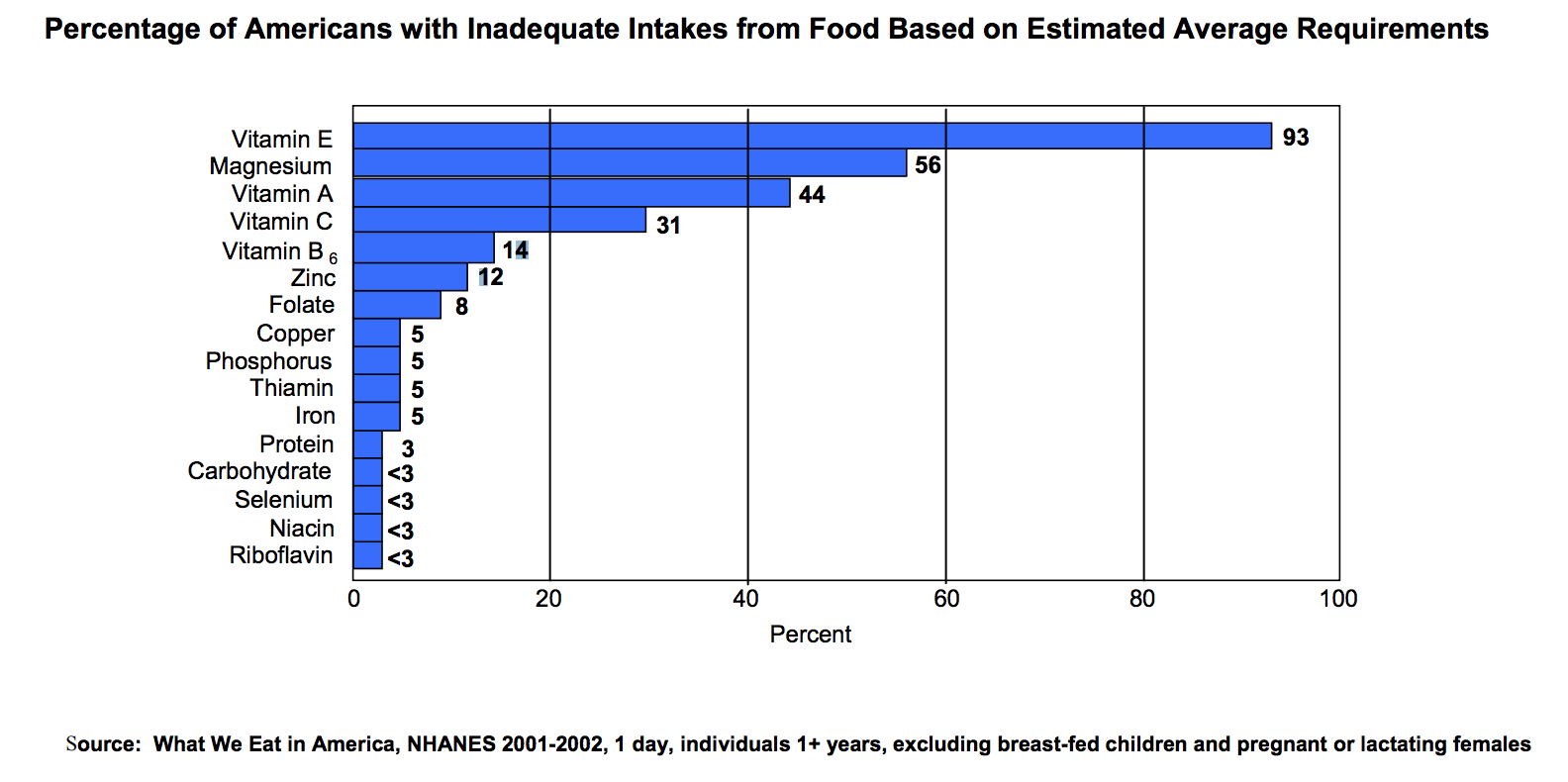
-Now, are 1st world people actually nutrient deficient? It seems to depend on which standard you use. i.e. the US standards for B12 deficiency differ from the Japanese standards. If you use US standards, b12 deficiency is relatively rare. If you use Japanese standards, the majority of US citizens are b12 deficient. Lol. Look at the table below.. 93% of americans are vitamin E deficient in the diet, 56% are magnesium deficient (the usual culprits... i probably would of added potassium to this) this is to meet BASIC metabolic requirements. Let alone if you're an athlete, or building muscle in the gym, or whatever it is you're doing (@IHateFin wanking off 10x a day)
-this study:Food Alone May Not Provide Sufficient Micronutrients for Preventing Deficiency1 shows 100% of athletes werent hitting their RDIs LOL
- Awww sheeeit:
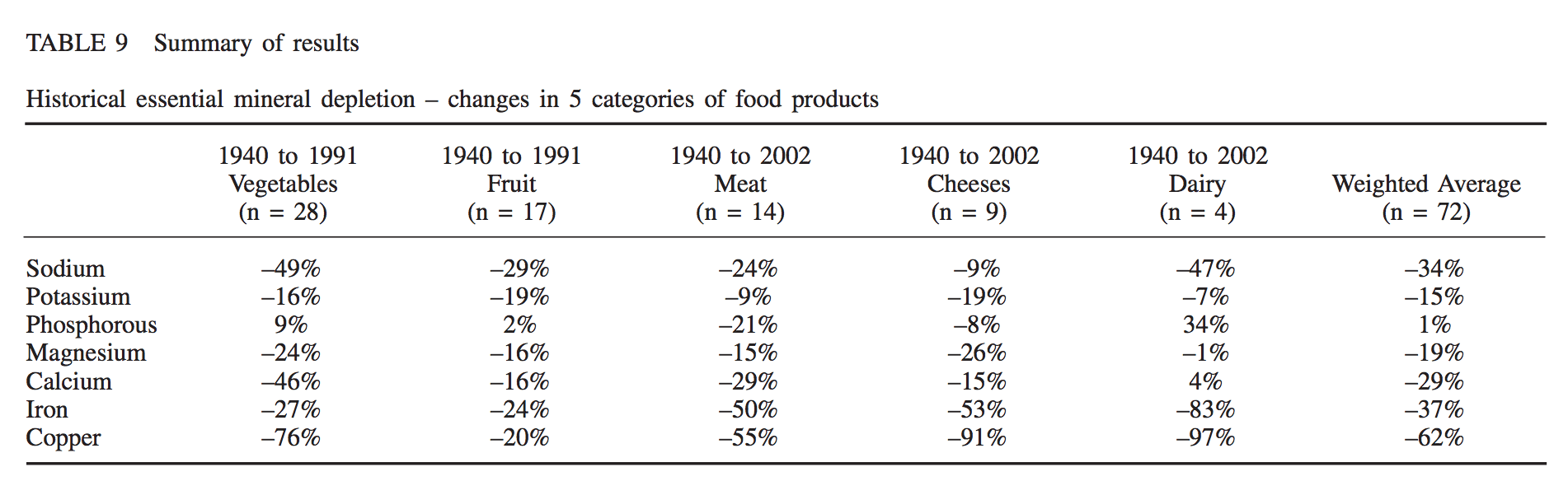
- "evidence suggests people with androgenic alopecia tend to suffer disproportionately from nutrient deficiencies — particularly in terms of amino acids, zinc, and copper."
-"Less severe nutrient deficiencies are linked to other conditions associated with pattern hair loss: PCOS, hypothyroidism, hyperparathyroidism, a SIBO infection, and even anemia. In some cases, nutritional supplementation may help improve the condition and marginally improve hair loss outcomes.
But I can’t stress this enough: this is a case-by-case basis. Hair loss sufferers who want to take a nutritional supplement should first test for a nutrient deficiency, and then the chronic conditions associated with whatever deficiencies they present — and before they supplement. Failure to do so may make waste money, waste time, worsen hair loss outcomes, and even increase morbidity."
Where the current mainstream studies point:
This is the guy who popularised the scalp massage technique
Some notes i took:
- Diet is 100% related to hair loss
- Too few nutrients can cause hair loss, so can too many
- Diffuse hair loss is often caused by nutrient deficiencies, but pattern hair loss is not (and 95% of men suffer from pattern hair loss lol)
- "pattern hair loss leads to scarring — also known as fibrosis — which is what makes the hair loss permanent"
-"hair loss from malnourishment — i.e., a nutrient deficiency — is rare in the first world. It usually presents as increased shedding, brittler hair, diffuse thinning, scalp skin irritability, and hair loss in clumps or patches. It isn’t primarily hormonally-driven — which is why so many nutrition-hair loss studies are done on children, not adults — i.e., before sex hormones kick in. And in general, hair loss from malnourishment doesn’t lead to scarring — which means once we address the nutrient deficiency, we often see hair regrowth."
- supplement companies see that these nutrient deficiencies relate to hair regrowth and say that it will fix you. But the nutrient deficincies are based on malnourished children suffering from diffuse thinning, not middle aged men living in a 1st world country with pattern baldness (hormonally driven)
- While low selenium is linked to hair fall, over-supplementation of selenium is associated with hair loss. The same is true for vitamin A — which is why one side effect of Accutane (a synthetic derivative of vitamin A) is thinning hair. Ironically, many hair loss supplements contain both selenium and vitamin A — despite the evidence that deficiencies in the first world are extremely rare.
- Moreover, several chronic conditions can occur alongside hair thinning. As a defense mechanism to these chronic conditions, our bodies often will adapt by forcing a nutrient deficiency. @Helen @mattyb @Boris @Orion In these cases, taking a supplement to correct our “perceived” nutrient deficiency can literally kill us. And unfortunately, many hair loss supplements contain these nutrients. [More on this later.]
-Now, are 1st world people actually nutrient deficient? It seems to depend on which standard you use. i.e. the US standards for B12 deficiency differ from the Japanese standards. If you use US standards, b12 deficiency is relatively rare. If you use Japanese standards, the majority of US citizens are b12 deficient. Lol. Look at the table below.. 93% of americans are vitamin E deficient in the diet, 56% are magnesium deficient (the usual culprits... i probably would of added potassium to this) this is to meet BASIC metabolic requirements. Let alone if you're an athlete, or building muscle in the gym, or whatever it is you're doing (@IHateFin wanking off 10x a day)
-this study:Food Alone May Not Provide Sufficient Micronutrients for Preventing Deficiency1 shows 100% of athletes werent hitting their RDIs LOL
- Awww sheeeit:
- "evidence suggests people with androgenic alopecia tend to suffer disproportionately from nutrient deficiencies — particularly in terms of amino acids, zinc, and copper."
-"Less severe nutrient deficiencies are linked to other conditions associated with pattern hair loss: PCOS, hypothyroidism, hyperparathyroidism, a SIBO infection, and even anemia. In some cases, nutritional supplementation may help improve the condition and marginally improve hair loss outcomes.
But I can’t stress this enough: this is a case-by-case basis. Hair loss sufferers who want to take a nutritional supplement should first test for a nutrient deficiency, and then the chronic conditions associated with whatever deficiencies they present — and before they supplement. Failure to do so may make waste money, waste time, worsen hair loss outcomes, and even increase morbidity."
Where the current mainstream studies point:
- Zinc deficiency is linked to diffuse or patchy hair loss — often all over the scalp (@Helen this is curious as i think zinc made my hair thinner - you suspect by putting pressure on cortisol)
- Iron deficiency is associated with diffuse hair loss, and mainly in women
- Selenium deficiency is associated with skin and hair pigment changes, as well as scalp hair loss
- Vitamin A deficiency is linked to phrynoderma — a condition where hair follicles produce too much protein called keratin, which leads to raised skin bumps and (sometimes) hair thinning
- Vitamin B complex deficiencies (B-3, B-6, B-7, B-12) are linked to hair disorders in women
- Essential fatty acid deficiency is linked to hair lightening and diffuse scalp or eyebrow hair loss

