Following this forum's past and current theories, i'd like to share a bit of the digging I did earlier today, after a user on RPF mentioned it briefly as a potential PFS solution (RisingSun). I found later that it was mentioned in PH back in 2012 as well
Trichostatin A is a histone deacetylase inhibitor, prevents the removal of acetyl groups from core histones. It basically acts at the Epigenetic level
To quote @Helen on histone;
I'm confused as what i'm trying to prove is the opposite of what Helen is saying regarding wether we should try to deacetyle or acetyle AR but here are some interesting studies regarding trichostatin A;
Apparently, Histone deacetylase inhibitor can also increase Zinc finger's activity; Dissecting the mechanism of histone deacetylase inhibitors to enhance the activity of zinc finger nucleases delivered by integrase-defective lentiv... - PubMed - NCBI which is a mechanism involved in PFS as well.
As stated by Helen, 1 case could benefit from an increase in ZF activity, while the other would get benefits from a decrease in ZF activity. Not sure if still viable today
Some quotes from this document found at PH; I highly recommend to read the whole document, Just did about 50% and it's really instructive
http://www.jbc.org/content/early/2002/06/07/jbc.M112134200.full.pdf
The finding that the AR is inactive at G1/S on both the MMTV and the probasin promoters implies that this regulation is a general feature of AR action. The MMTV LTR is a promiscuous promoter responsive to androgens, glucocorticoids, mineralocorticoids and progestins (37,38).
(..)
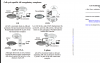
The transcriptional inactivity of the AR at the G1/S junction coincides with a decrease in AR protein level, although activity can be partly rescued without an increase in receptor. Inhibition of histone deacetylases brings about this partial restoration of AR activity at the G1/S boundary, demonstrating the involvement of acetylation pathways in the cell cycle regulation of AR transcriptional activity. Finally, a model is proposed which explains the inactivity of the AR at the G1/S transition by integrating receptor levels, the action of cell-cycle regulators and the contribution of histone acetyltransferase-containing coactivators.
Not quoting everything but the whole doc is gold, read through it. The schema at the end is very interesting
-----
This study's outcome is also interesting
"These results suggest that HDAC inhibitors may be able to promote the differentiation of rat C6 glioma cells through the production of 5alpha-reduced neurosteroids"
Histone deacetylase inhibitors promote neurosteroid-mediated cell differentiation and enhance serotonin-stimulated brain-derived neurotrophic facto... - PubMed - NCBI
additional quotes;
"In a significant proportion of breast cancers, the ERα gene is abnormally methylated at its CpG island. As a result, the expression of ERα gene is inhibited. Consequently, researchers started to study how HDAC inhibitors reverse resistance to anti-estrogen therapies in vitro. It was found that HDAC inhibitors can restore sensitivity to ER in endocrine-resistant and triple-negative breast cancer cell lines "
"In the animal model of sclerotic skin induced by bleomycin, injection of Trichostatin A reduced significantly dermal fibrosis(..) <Trichostatin A> may be useful as an anti fibrotic agent "
Trichostatin A is a histone deacetylase inhibitor, prevents the removal of acetyl groups from core histones. It basically acts at the Epigenetic level
To quote @Helen on histone;
So now the body has low DHT. Now follow me carefully. since DHT levels go very low. The body overexpresses the ARs in all DHT sensitive tissues
It is mainly in prostate and the BRAIN. Also body acetylates the histone on the ARs proteins. by acetylating histones, the body increases the effect of DHT on gene expression.
This way even with very very little DHT levels in blood, it can act the same way as normal DHT.
Then after you come of the drug. your DHT goes up and you have insane DHT action in the brain , prostate and all DHT sensitive tissues. Since in those tissues DHT is 10 times the volume of testosterone. There is basically no testosterone there.
SO after you go off finasteride DHT goes back up and now the brain has to lower its action, but histones are already acetylated, and ARs are highly overexpressed in all DHT sensitive places.
I'm confused as what i'm trying to prove is the opposite of what Helen is saying regarding wether we should try to deacetyle or acetyle AR but here are some interesting studies regarding trichostatin A;
Apparently, Histone deacetylase inhibitor can also increase Zinc finger's activity; Dissecting the mechanism of histone deacetylase inhibitors to enhance the activity of zinc finger nucleases delivered by integrase-defective lentiv... - PubMed - NCBI which is a mechanism involved in PFS as well.
As stated by Helen, 1 case could benefit from an increase in ZF activity, while the other would get benefits from a decrease in ZF activity. Not sure if still viable today
Some quotes from this document found at PH; I highly recommend to read the whole document, Just did about 50% and it's really instructive
http://www.jbc.org/content/early/2002/06/07/jbc.M112134200.full.pdf
The finding that the AR is inactive at G1/S on both the MMTV and the probasin promoters implies that this regulation is a general feature of AR action. The MMTV LTR is a promiscuous promoter responsive to androgens, glucocorticoids, mineralocorticoids and progestins (37,38).
(..)
The transcriptional inactivity of the AR at the G1/S junction coincides with a decrease in AR protein level, although activity can be partly rescued without an increase in receptor. Inhibition of histone deacetylases brings about this partial restoration of AR activity at the G1/S boundary, demonstrating the involvement of acetylation pathways in the cell cycle regulation of AR transcriptional activity. Finally, a model is proposed which explains the inactivity of the AR at the G1/S transition by integrating receptor levels, the action of cell-cycle regulators and the contribution of histone acetyltransferase-containing coactivators.
Not quoting everything but the whole doc is gold, read through it. The schema at the end is very interesting
-----
This study's outcome is also interesting
"These results suggest that HDAC inhibitors may be able to promote the differentiation of rat C6 glioma cells through the production of 5alpha-reduced neurosteroids"
Histone deacetylase inhibitors promote neurosteroid-mediated cell differentiation and enhance serotonin-stimulated brain-derived neurotrophic facto... - PubMed - NCBI
additional quotes;
"In a significant proportion of breast cancers, the ERα gene is abnormally methylated at its CpG island. As a result, the expression of ERα gene is inhibited. Consequently, researchers started to study how HDAC inhibitors reverse resistance to anti-estrogen therapies in vitro. It was found that HDAC inhibitors can restore sensitivity to ER in endocrine-resistant and triple-negative breast cancer cell lines "
"In the animal model of sclerotic skin induced by bleomycin, injection of Trichostatin A reduced significantly dermal fibrosis(..) <Trichostatin A> may be useful as an anti fibrotic agent "